



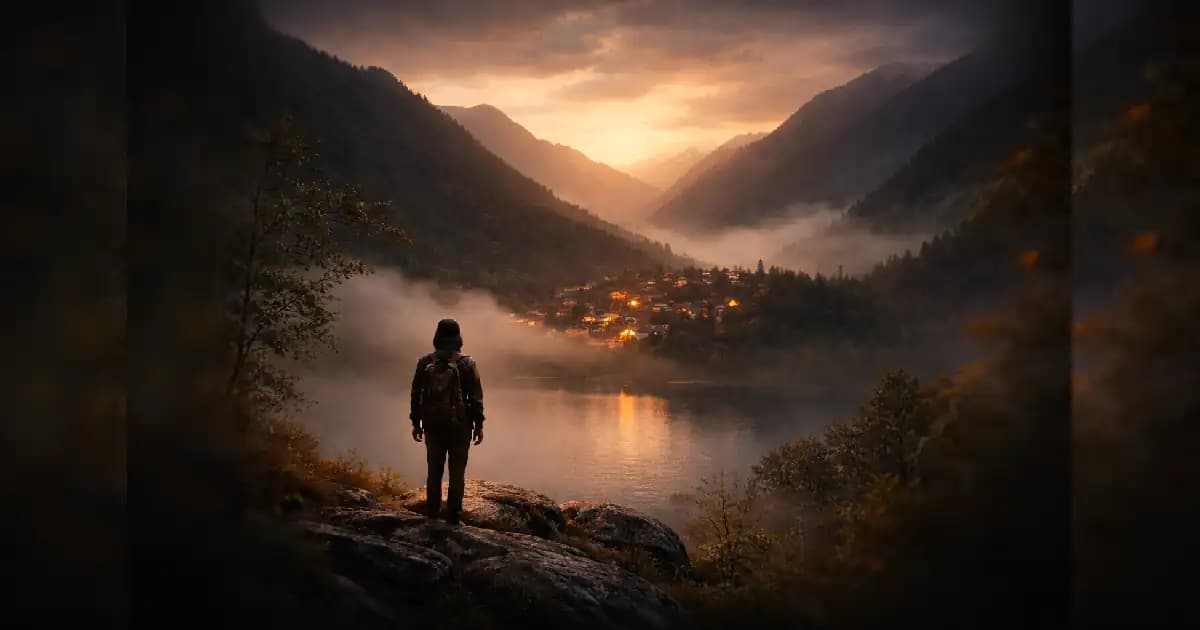
Hidden travel destinations have a way of slipping into your imagination quietly, almost accidentally through a half-heard conversation in an airport café, a photo shared without a location tag, a story someone tells and then quickly changes the subject. These are the places travelers talk about in lowered voices, not because they’re forbidden, but because part of their magic lies in remaining just out of reach.
There is a growing appetite for places like this. Not the “top ten” spots plastered across feeds and booking apps, but corners of the world that still feel personal, fragile, and wonderfully unoptimized. The kind of destinations where the silence feels intentional, where discovery is slow, and where being there feels like a privilege rather than a purchase.
When travel stopped being about ticking boxes
For years, Travel culture rewarded visibility. If a place was beautiful, it had to be shared. If it was obscure, it needed to be “discovered.” Entire towns were transformed by their sudden appearance on trending lists. What started as curiosity often ended as crowding.
But something has shifted. Many travelers are quietly rebelling against the pressure to perform their trips online. They want places that don’t demand constant documentation, destinations that don’t feel like stages. Hidden travel destinations offer that relief. They aren’t about bragging rights; they’re about breathing room.
These places often lack grand monuments or iconic skylines. Instead, they offer smaller, more intimate rewards: a village café where no one speaks your language but everyone smiles; a coastal path where you walk for an hour without seeing another soul; a night sky unpolluted by city glow.
The unspoken rules of secret places
What makes a destination “hidden” isn’t just geography. It’s social behavior. Many of these places are well known to locals and regional travelers but deliberately absent from global hype cycles. Sometimes this is accidentala lack of infrastructure, limited accommodation, or seasonal access. Other times, it’s intentional.
Travelers who stumble upon these places often adopt an unspoken code. They share stories selectively. They avoid geotagging. They describe the feeling rather than the coordinates. This quiet protectiveness isn’t selfishness; it’s an instinctive response to seeing how quickly attention can change a place.
In some regions, communities themselves have learned the cost of sudden popularity. They welcome visitors, but not mass exposure. The result is a kind of low-volume tourism that feels more like being invited than arriving.
Why these places feel different when you’re there
Hidden travel destinations change how time feels. Without crowds or packed itineraries, days stretch. You notice details you’d normally missthe way the light moves across old stone, the rhythm of daily life, the soundscape of mornings and evenings.
There’s also a psychological shift. When a place isn’t designed for tourists, you stop behaving like one. You dress differently. You move slower. You listen more. Interactions feel less transactional and more human, even if they’re brief.
This is often where travelers rediscover why they wanted to travel in the first place. Not to replicate images they’ve already seen, but to experience something unfiltered and unrepeatable.
The quiet destinations everyone’s circling but few are naming
Across continents, there are pockets drawing this kind of attention. Inland regions that were once bypassed for coastal resorts. Mountain valleys known mostly to hikers and shepherds. Small islands with limited ferries and no nightlife to speak of. Historic towns whose names don’t immediately register in global consciousness.
What these places share isn’t a single aesthetic, but a resistance to scale. They don’t expand easily. Roads are narrow. Lodging is limited. Seasons matter. When too many people arrive at once, the balance breaks.
Travelers sense this fragility, even if they can’t articulate it. It’s why recommendations often come with caveats: “Go off-season.” “Stay longer, not shorter.” “Respect how things are done.”
Why hidden travel destinations matter now
In an era of constant connectivity, genuine disconnection has become rare. Hidden travel destinations offer something increasingly scarce: the feeling of being temporarily unreachablenot just digitally, but culturally.
They matter because they remind us that not everything needs to be scaled, optimized, or monetized to be valuable. They challenge the idea that travel is about consumption rather than participation. And they provide a model for tourism that prioritizes longevity over virality.
For local communities, this kind of travel can be sustainable when handled carefully. Fewer visitors, staying longer, spending locally, and engaging respectfully often contribute more than busloads of day-trippers ever could.
The risk of secrecy becoming the next trend
Of course, even secrecy can be commodified. “Hidden” has become a marketing term, sometimes applied to places already straining under attention. The danger isn’t discovery itself, but speed. When exposure outpaces a place’s ability to adapt, tension follows.
Social media accelerates this process. A single viral video can undo years of quiet equilibrium. Travelers are increasingly aware of their role in this cycle, which is why many choose discretion over disclosure.
The future of hidden travel destinations may depend less on finding new places and more on changing how we talk about the ones we love.
Traveling quietly, without pretending you’re the first
One of the myths surrounding hidden destinations is the fantasy of being the “first” outsider to arrive. In reality, these places are deeply lived-in. They have histories, routines, and unspoken norms that long predate any visitor.
The most meaningful experiences happen when travelers let go of novelty-seeking and lean into observation. Ask before photographing. Learn a few local phrases. Accept that some spaces aren’t meant for you, and that’s okay.
This mindset transforms travel from extraction into exchange. You leave with fewer photos, perhaps, but richer memories.
The subtle future of travel discovery
As overtourism becomes harder to ignore, the appeal of quieter places will only grow. But the next chapter of travel isn’t about uncovering ever more remote locations. It’s about redefining what discovery means.
Discovery can be returning to places that already exist in the shadow of louder neighbors. It can be choosing depth over breadth. It can be valuing presence over proof.
Hidden travel destinations aren’t disappearing. They’re waitingpatiently, cautiouslyfor travelers who understand that not everything beautiful needs to be broadcast.
A different kind of souvenir
When you leave a quiet place, what stays with you isn’t a checklist of sights. It’s a feeling: the sense of having been somewhere that didn’t ask anything of you except respect. These destinations linger in memory precisely because they don’t shout for attention.
Perhaps that’s why travelers try to keep them secret. Not to exclude others, but to preserve a way of experiencing the world that feels increasingly rare.
And maybe the real secret isn’t where these places arebut how you choose to travel when you find them.
FAQs
What are hidden travel destinations?
They are places that receive fewer visitors and less online exposure, often because of limited access, minimal promotion, or intentional discretion by locals and travelers.
Why do people want to keep certain destinations secret?
To protect them from overcrowding, preserve local culture, and maintain the qualities that make them special in the first place.
Are hidden destinations safe to visit?
Many are safe, but they may lack extensive tourist infrastructure. Travelers should research thoughtfully and be prepared for fewer conveniences.
How can I find lesser-known places without harming them?
Look beyond trending lists, travel slower, talk to locals respectfully, and avoid broadcasting exact locations online.
Is visiting hidden places more expensive?
Not necessarily. Costs can be lower due to less demand, but limited accommodation or transport options may require flexibility rather than higher budgets.