


A Holiday, a Shooting, and a Nation in Shock
Late on the afternoon of December 14, 2025, one of Sydney’s busiest beachfronts became the scene of profound Tragedy. A mass shooting later labeled an antisemitic terrorist attack erupted during a Hanukkah celebration, a festival meant to mark light and hope. In minutes, 15 lives were extinguished, dozens were wounded, and a sunlit summer gathering became a site of horror. Authorities have charged the surviving suspect, the son of one of the shooters, with 15 counts of murder and terrorism. The father was killed on the scene.
Background-color: transparent;">This wasn’t just another criminal incident. In a country where mass shootings are rare and the public psyche is shaped by a long tradition of relative peace, the attack pierced a national sense of Security. It has forced Australians and observers globally to confront fraught questions about hate, identity, gun access, community protection, and the increasingly globalized nature of extremist violence.
A Place Once Defined by Sunlight and Celebration
Bondi Beach: An Unlikely Scene of Mass Violence
Bondi Beach is a symbol: golden sand, rolling surf, and a cosmopolitan mix of locals and visitors. On the afternoon of the attack, thousands had gathered in Archer Park for a Hanukkah event hosted by a Jewish community organization. Such gatherings are part of normal life blending festive spirit with family, faith, and openness.
In less than ten minutes, that normality was shattered. According to police and eyewitness accounts, two gunmen opened fire into the crowd, Killing indiscriminately. One was shot dead by responding officers; the other was critically wounded and later charged. Investigators later found and disabled improvised explosive devices in a vehicle linked to the attackers.
The assault stands as the deadliest mass shooting in Australia in nearly three decades, second only to a notorious historic massacre, and the most lethal terror attack in the nation in modern memory.
The Human Toll: Grief, Courage, and Stories Behind the Statistics
Lives Lost and Lives Upended
Among the dead were People of diverse backgrounds and ages: an 87 year old Holocaust survivor, children, local community leaders, international visitors, and those drawn simply by a sense of tradition and togetherness. Another victim was a 10 year old girl whose final moments before the shooting were Captured by a photographer hired for the event images that now haunt families and the broader public alike.
Survivors and witnesses describe chaotic scenes as gunfire rippled through the park, sending families and friends fleeing for cover. Emergency services struggled to cope with mass casualties, while nearby surf lifesavers first on the scene pulled the wounded to Safety, used surfboards as stretchers, and provided critical aid before ambulances could arrive.
Acts of Heroism and Shared Humanity
In the midst of horror, individuals displayed extraordinary courage. A local store owner confronted one of the shooters and disarmed him despite being shot in the process. His bravery and the public outpouring of support, including more than $1.6 million in donations for his recovery have become emblematic of a broader communal refusal to let fear dominate shared spaces.
Another individual, an Israeli visitor, is gravely wounded after returning to assist first responders another stark reminder that selflessness often rises in adversity.
Social and Cultural Ramifications: Why This Attack Resonates Worldwide
Rising Antisemitism and Global Context
This attack cannot be understood in isolation. In recent years, Jewish communities globally have faced a pattern of targeted violence and intimidation. In Europe, North America, and now Australia, public Jewish life holiday celebrations, places of worship, communal events have endured threats and attacks. Analysts link this to a toxic mix of long standing prejudice, imported extremist ideologies, and heightened tensions connected to geopolitical conflicts abroad.
The Bondi assault, labeled by authorities as inspired by extremist ideologies, surfaces critical questions about how diaspora communities are protected and integrated and how governments balance civil liberties with security imperatives.
Community Response: Mourning, Memory, and Unity
Public Rituals of Remembrance
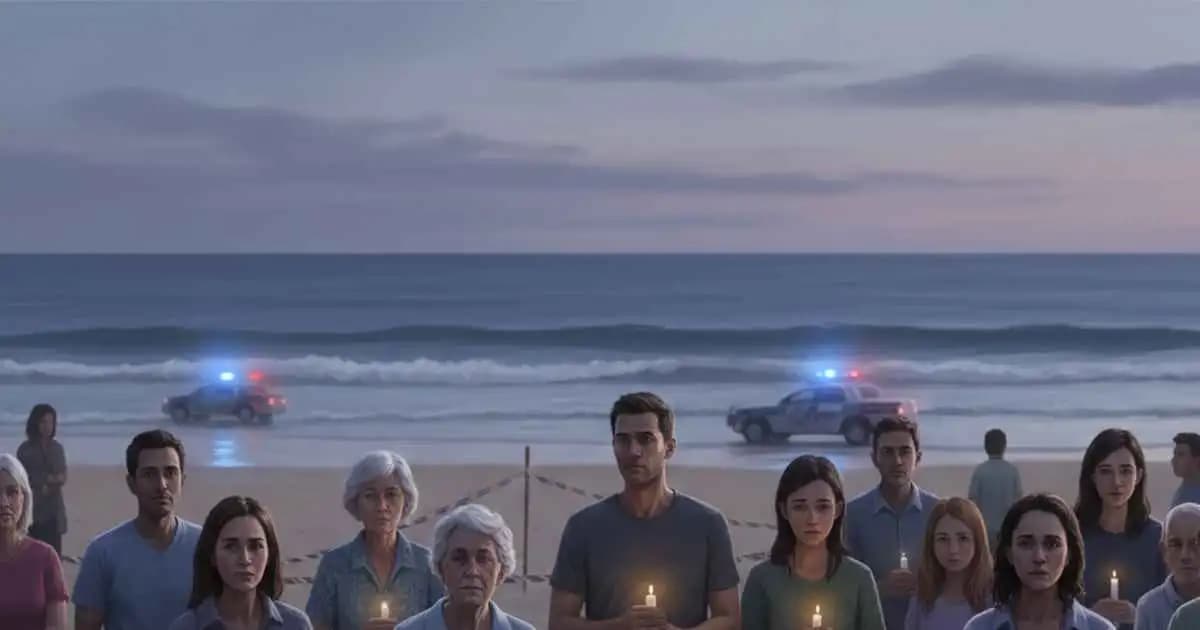
In the days after the shooting, thousands gathered on Bondi Beach for solemn ceremonies: forming circles in the water, observing moments of silence, lighting candles, and sharing personal stories of loss. These spontaneous acts of solidarity between Jews, Muslims, Christians, and others reflected a public desire to reclaim spaces of joy and togetherness.
Armed police presence outside places of worship and community centers marked both a sense of vigilance and an unspoken fear of potential reprisals or copycat incidents. Authorities have issued warnings against unauthorized protests or tensions that could escalate, emphasizing unity and calm.
National Debates Over Gun Laws and Hate Prevention
In the political arena, the massacre has reignited debates over gun ownership and hate crime legislation. Australia’s strict firearm laws, enacted after earlier mass casualties, are now being examined anew. Government officials from the national prime minister to state lawmakers are proposing tighter restrictions and measures aimed at preventing extremist violence and hate speech.
Deeper Patterns: Security, Integration, and Social Policy
Questions Over Preventive Intelligence
Investigations have revealed that the surviving attacker was previously known to security agencies but not considered a high risk threat before the incident. This has raised uncomfortable questions about how ideological radicalization is monitored and flagged and what thresholds are used to justify intervention.
The suspects’ extended visits abroad including time spent in the Philippines prior to the attack have been scrutinized but, according to officials there, show no evidence of formal extremist training. These details complicate narratives around global terror networks and raise the specter of “lone actor” radicalization pathways that are harder to predict or counter.
Cultural Resilience vs. Lingering Fear
Bondi’s return to everyday beach life joggers, surfers, coffee drinkers underscores a collective effort to resist letting terror dictate daily rhythms. Yet beneath this surface lies an undercurrent of insecurity. Jewish leaders have expressed not only grief but visceral anger that a public festival could be vulnerable to such violence.
The dual narrative of communal defiance alongside heightened alertness and fear encapsulates the psychological impact of terror: people wish for normalcy, yet cannot escape the memory of trauma.
Future Implications: Healing, Policy, and Global Solidarity
Long Term Security Reforms
Moves toward enhanced hate crime laws and more rigorous gun control in Australia may serve as a model for other democracies grappling with similar challenges. Effective policy will require careful calibration between protecting civil liberties and preventing extremist violence without stigmatizing entire communities.
Community Bonds and Public Memory
How societies remember and honor victims will shape collective resilience. The integration of commemorations into public life from surf clubs’ memorials to ocean tributes may bind communities more tightly, creating shared narratives of courage rather than division.
Global Conversations on Extremism and Inclusion
This attack underscores that no country is immune when ideological hate manifests in violence. International cooperation on countering radicalization, supporting diaspora communities, and fostering interfaith dialogue will be essential to reducing future risks.
Frequently Asked Questions
Q1: Why was the Bondi Beach attack seen as a terrorist act?
Authorities classified it as terrorism because it targeted a specific religious group Jewish Australians and reportedly drew ideological inspiration from extremist movements.
Q2: How rare are mass shootings in Australia?
Mass shootings are rare in Australia due to strict gun laws. This incident marks the deadliest in nearly 30 years, prompting reevaluation of existing safeguards.
Q3: What has been the community response?
Communities have engaged in large public commemorations, moments of silence, and interfaith solidarity events, signaling resilience and shared grief.
Q4: What policy changes might follow?
Officials are proposing stronger hate crime legislation, tighter gun controls, and improved protective measures for community events and minority groups.
Conclusion: From Shock to Shared Purpose
The Bondi Beach massacre has left an indelible mark on Australia’s national conscience. But beyond mourning, it has sparked deep reflection on how societies confront hatred, protect diversity, and nurture resilience. In the end, the way communities remember, respond, and reform may prove the most profound counter to the violence that stole so many lives.