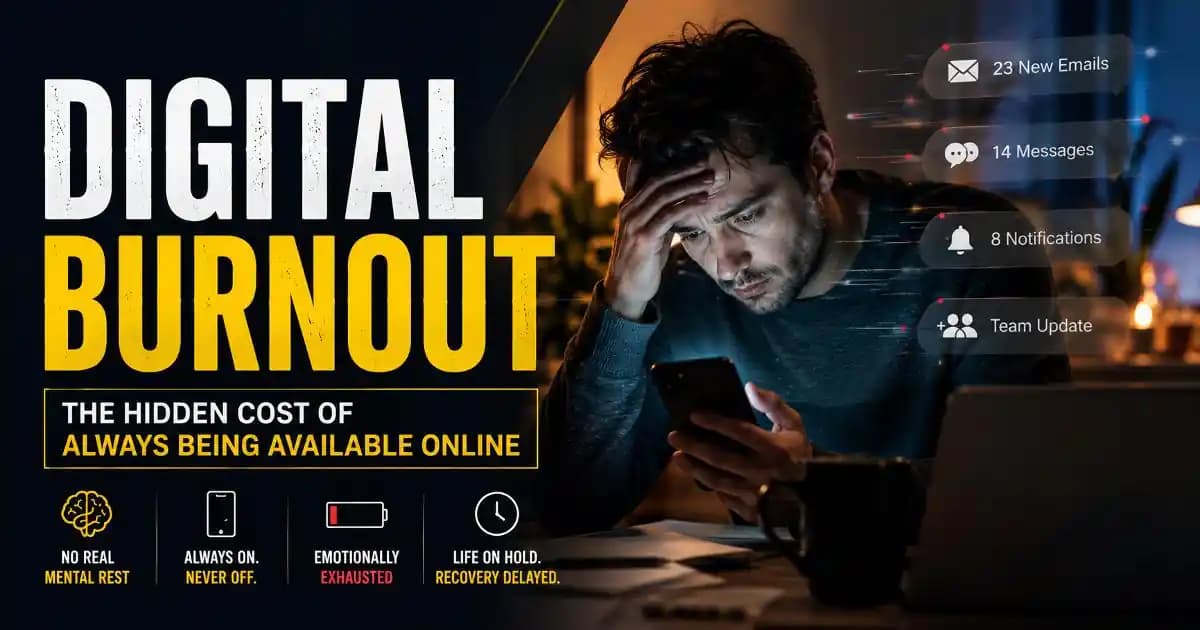




There was a moment last winter when I realized I hadn’t looked up at the sky in weeks.
I was standing in my kitchen, phone in hand, skimming through a news app, while a podcast played in the background and an unread email pinged onto my smartwatch. My heart was racing-not from urgency, but from the constant flood of inputs. I had a sudden urge to walk outside barefoot and cry.
That’s when I knew: I needed a Digital detox, not a new productivity app.
I didn’t need to optimize my life-I needed to feel it again.
How Digital Burnout Sneaks In
We don’t always notice the slow seep of Digital (1) overload. It’s not just the social media doomscrolling or the dopamine spikes from notifications. It’s more insidious.
You begin to forget what a quiet morning feels like without checking your phone before your feet hit the floor.
You stop sitting with your emotions-because distraction is always one swipe away.
You tell yourself you’re connected, but feel lonelier than ever.
It’s no wonder we’re exhausted. According to research, the average adult spends over 7 hours a day on screens. That’s more time than we sleep. Yet somehow, despite this hyperconnection, we feel increasingly disconnected from ourselves.
For me, it took a near panic attack while trying to reply to 37 unread DMs that made me ask-what am I even doing?
My First Digital Detox: 3 Days Offline
I decided to try a weekend Digital again detox. No social media. No emails. No streaming. No Slack. No texts.
Only calls (if absolutely necessary), books, a notebook, nature, and music-played on an old speaker.
The first 12 hours felt like withdrawal.
I reached for my phone unconsciously-while brushing my teeth, waiting for the kettle to boil, even while reading. My thumbs hovered above nothing. I was twitchy. Restless. The Silence felt oppressive.
But then something remarkable happened. By day two, the fog started to lift.
I noticed the sound of birds. I saw how the morning light danced on my windowpane. I cried while journaling, tears I didn’t know I was holding. I laughed-like really laughed-with a friend over tea, phone out of sight.
It felt like I had been underwater for years, and finally broke the surface.
Why Our Nervous Systems Crave a Digital Break
What I learned-and later confirmed through this deep healing journey-is that our nervous systems weren’t built for 24/7 connectivity.
Notifications hijack our focus. Multitasking splits our attention. Algorithms are designed to keep us hooked in emotionally dysregulated states. Over time, our baseline anxiety rises. We sleep worse. We numb out. We lose touch with our own inner rhythms.
A digital detox is not just about unplugging-it’s about coming back to your body, your breath, your thoughts, without filters or curated feeds.
What Happens When You Stop Consuming and Start Feeling
Without the endless scroll, space opened up in my brain. Here’s what I noticed during my digital detox:
- Dreams returned. Real ones, vivid and emotional. I hadn’t remembered dreams in months.
- My mind slowed down. I could hold a thought for more than 10 seconds. Conversations deepened.
- Gratitude emerged. I noticed beauty in little things: the way tea steams in morning light, the giggle of a neighbor’s child, the texture of wind on skin.
- I started creating again. I wrote poetry. I cooked slow meals. I sang to myself.
It wasn’t about being productive. It was about being human again.
If you’ve forgotten what that feels like, I invite you to try even one day offline. You may be surprised how quickly your soul responds.
Reflection Questions for Your Own Digital Detox
- When was the last time you were completely screen-free for a full day?
- What feelings arise when you’re not distracted?
- What are you afraid you’ll miss if you log off-and what do you actually miss when you're always online?
- How does your body feel after a long day of digital consumption?
Write your answers. Be brutally honest. Sometimes the clarity comes in the discomfort.
The Culture of Constant Online-ness
We live in a culture that glorifies being always available. Hustle. Post. Respond fast. Show up everywhere. The fear of missing out is weaponized by design.
But what we’re truly missing is depth.
Connection without presence is hollow.
We comment “beautiful” on vacation photos but haven’t seen a real sunset in weeks. We double-tap baby pictures but don’t visit our aging parents.
This article on screen-free nighttime habits reminded me that healing doesn’t happen in pixels-it happens in pause, in presence, in the spaces in-between.
Tips That Actually Help (No Guilt-Tripping)
You don’t need to go full monk-mode. Here’s what helped me ease into a more mindful digital life:
- Set tech-free zones. I keep my bedroom screen-free. No phones in bed.
- Use grayscale mode. Less stimulation = less craving.
- Replace, don’t just remove. Swap scrolling with journaling, walking, cooking, calling a friend.
- Batch notifications. I check messages once or twice daily. That’s it.
- Celebrate small victories. One screen-free evening per week is a great start.
The goal isn’t perfection. It’s awareness.
The Unseen Gains of Unplugging
After my detox, I felt…
- Lighter. Like I had space in my chest again.
- More real. Less performative, more grounded.
- Clearer. My thoughts sharpened, my decisions became easier.
- More connected. Ironically, logging off made my real relationships stronger.
It reminded me that I am not my profile, my inbox, or my notifications.
I am a person-with a heart, a history, and a hunger for meaning.
Digital Detox and Deep Healing: They’re Intertwined
Healing isn’t just about therapy or meditation. It’s about what you remove, not just what you add.
When I stepped away from the screen, I heard echoes of unresolved emotions that needed space to surface. I remembered childhood dreams, past heartbreaks, longings I buried under productivity.
Logging out to tune in helped me remember: your soul doesn't whisper louder-it waits until you're quiet enough to hear it.
Daily Practices That Keep Me Grounded
Even after my detox ended, I built rituals to stay rooted:
- Morning pages (handwritten, no phone nearby)
- Nature walks with no AirPods
- Candlelit dinners with zero screens
- Sabbath Sundays (no social, no screens, just life)
These small acts are how I reclaim my peace daily.
When Digital Life Feels Safer Than the Real One
Let’s be real-sometimes we dive into screens because real life feels too hard. Loneliness, grief, shame, anxiety. The feed is easier to face than our own reflections.
But the truth is: we can’t heal what we won’t feel.
Digital detox isn’t about rejecting technology. It’s about choosing intentionality over numbness.
And yes, I still use tech-I’m not living in a cave. I work online. I use social media for sharing healing content. But I refuse to be owned by it anymore.
If You’re Considering a Digital Detox, Read This
Start where you are. You don’t need to disappear. Begin with 2 hours. Then a day. Then a weekend.
Notice what bubbles up. Witness it. Feel it. Let it move through you.
Your nervous system will thank you.
Your creativity will return.
And slowly, your real life will start to feel like home again.
In Closing (But Not Really a Conclusion)
This isn’t about being anti-tech. It’s about being pro-you.
In a world that constantly demands your attention, choosing silence is revolutionary.
Let your digital detox be an act of rebellion. Of remembrance. Of love.
And when you come back online, may you do so with clarity, boundaries, and a wide open heart.
🧘♀️ Want more tools for deep healing? Explore this honest look at transforming trauma, or discover the power of nourishing rituals that bring you back to the body.
Let stillness lead the way. 🌿