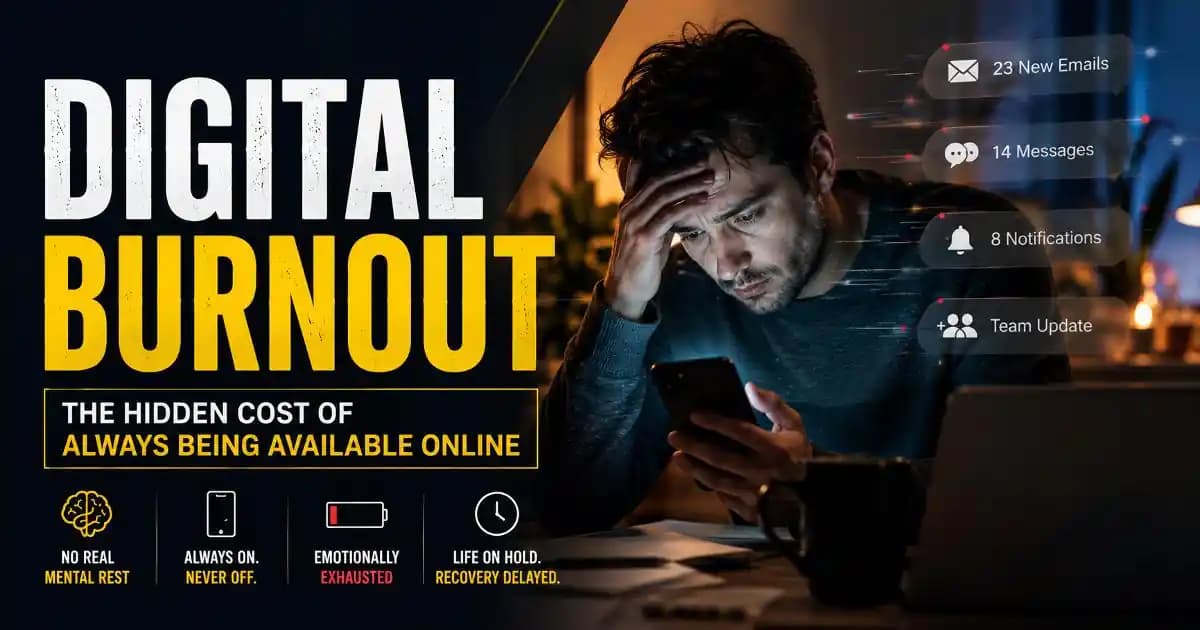




In a world drowning in notifications, endless scrolling, and Digital overload, something unexpected is happening.
Millions of people across the globe are quietly choosing less.
From overworked professionals in the U.S. to students in India, families in Europe, and remote workers across Asia, a powerful lifestyle shift is spreading: digital minimalism.
This isn’t about quitting technology or escaping modern life. It’s about regaining control of attention, time, mental clarity, and emotional well-being.
As screen time reaches historic highs and burnout becomes the norm, people are discovering that intentional tech use doesn’t just reduce stress it restores life.
This article explores:
- What digital minimalism really means
- Why screen addiction is accelerating worldwide
- How different cultures are cutting screen time fast
- Science-backed strategies you can apply starting today
What Is Digital Minimalism?
Digital minimalism is the practice of using technology with intention.
Instead of letting apps, notifications, and algorithms control your behavior, you deliberately choose:
- Which tools deserve your attention
- When and how you use them
- What digital inputs truly add value to your life
It’s not anti-technology.
It’s anti-unconscious usage.
At its core, digital minimalism asks one powerful question:
“Does this technology meaningfully support the life I want to live?”
If the answer is no, it goes.
Why Screen Time Is Exploding Worldwide
Today, the average person:
- Picks up their phone 150–200 times per day
- Spends 6–10 hours on screens daily
- Switches tasks every 40 seconds
- Rarely experiences uninterrupted focus
This constant stimulation leads to:
- Digital fatigue
- Chronic stress and anxiety
- Sleep disruption
- Reduced attention span
- Lower creativity and productivity
The Neuroscience Behind Digital Overload
Social media, notifications, and infinite scrolling are designed to exploit the brain’s dopamine system. Every like, swipe, and alert creates a tiny reward training your brain to crave constant stimulation.
Over time:
- Deep focus becomes painful
- Silence feels uncomfortable
- Boredom disappears and so does creativity
This is why digital minimalism isn’t optional anymore.
It’s psychological self-defense.
How People Around the World Are Cutting Screen Time Fast
🇺🇸 United States: The “No-Notification Lifestyle”
Many Americans now disable 90% of push notifications, keeping only:
- Calls
- Messages
- Critical work alerts
Result: Up to 40–50% reduction in screen time
Why it works:
Notifications hijack attention. Removing them breaks the dopamine-trigger loop.
🇮🇳 India: Time-Blocking for Digital Use
Students and professionals use strict digital time blocks instead of random scrolling:
- Social media windows
- Focused work sessions
- Learning slots
- Offline breaks
Why it works:
Structure eliminates impulse behavior and replaces chaos with clarity.
🇯🇵 Japan: Minimalist Phone Home Screens
Inspired by Zen philosophy, many users keep:
- Blank home screens
- Only 3–5 essential apps
Why it works:
Fewer visual cues = fewer urges = calmer attention.
🇪🇺 Europe: Tech-Free Evenings
Families across Europe adopt screen-free time after 7 PM.
Why it works:
Evening screen exposure disrupts melatonin, damages sleep quality, and weakens Emotional connection.
Middle East: Social Media Fasting
Weekly or monthly Social media fasts are increasingly common.
Why it works:
Temporary abstinence resets dopamine sensitivity and restores emotional balance.
🇰🇷 South Korea: Digital-Detox Cafés
Some cafés require customers to lock phones away before entering.
Why it works:
Removing access entirely is the fastest way to break addiction loops.
Expert-Backed Digital Minimalism Techniques That Actually Work
1. The 30-Minute Question
Before opening any app, ask:
“Will this improve my life in the next 30 minutes?”
If not don’t open it.
2. App Time Limits (Non-Negotiable)
Limit entertainment and social media apps to 10–20 minutes per day.
3. Replace Screens With Real Life
Scrolling is often a placeholder, not a need.
Replace it with:
- Walking
- Reading physical books
- Music
- Conversations
- Creative hobbies
4. The “Dumb Phone Day”
Once a week:
- Calls
- Messages
- Nothing else
5. Sleep Without Your Phone
Phones near your bed increase anxiety and destroy sleep quality.
Charge it across the room.
6. Track Screen Time Daily
What you measure, you can change.
Practical How-To: Start Digital Minimalism Today
Step 1: App Declutter
Delete any app unused in the last 30 days.
Step 2: Notification Purge
Turn off all non-essential alerts.
Step 3: Define Your “Essential 5”
Only 5 apps earn prime access. Everything else is optional.
Step 4: Screen Boundaries
Example:
- Morning: No screens for 1 hour
- Night: No screens after 8 PM
Step 5: Real-Life Substitutes
For every digital habit, create a physical alternative.
Step 6: Weekly Digital Detox
Half-day or full-day disconnect.
Measurable Benefits of Digital Minimalism
People consistently report:
- Sharper focus
- Lower stress and anxiety
- Better sleep
- Increased creativity
- More free time
- Stronger relationships
- Higher productivity
- Greater life satisfaction
Most importantly:
They feel present again.
Real Stories From Around the World
Maria (Spain)
“I cut my screen time by 3 hours a day with tech-free evenings. I finally feel rested.”
Arjun (India)
“Time-blocking changed my academic performance completely.”
James (USA)
“Turning off notifications gave me my attention span back.”
Digital minimalism works because it aligns with human psychology, not against it.
FAQ: Digital Minimalism & Screen Time Reduction
1. What is digital minimalism in simple terms?
Using technology intentionally instead of compulsively.
2. How much screen time is healthy?
2–4 hours per day (excluding work/study).
3. Do I need to quit my phone?
No. You need to quit unconscious usage.
4. How fast will I see results?
Many people reduce screen time by 1–3 hours in the first week.
5. Is digital detox safe (ways)?
Yes and often life-changing.
Conclusion: A Global Reset for the Digital Age
Digital minimalism is not a trend.
It’s a global correction.
As attention becomes the most valuable currency, those who protect it gain:
- Clarity
- Energy
- Freedom
- Control
You don’t need extreme measures.
You need intentional choices.
Whether you’re a student, professional, creator, or simply exhausted by constant Digital noise, the solution starts with one decision:
Use technology with purpose not out of habit.