



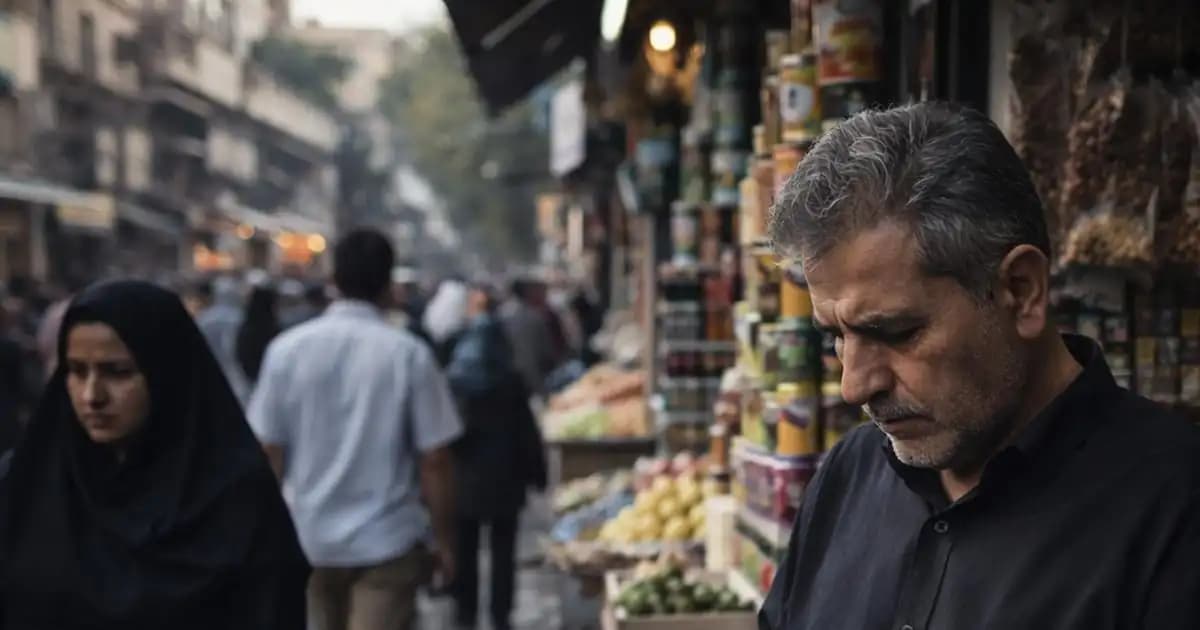
Iran protests analysis matters because public unrest in Iran is rarely only about streets and slogans. It reflects deeper economic fractures, unresolved political legitimacy, and an international environment where internal instability can quickly become a geopolitical lever. Understanding what is actually driving Iran’s protests and what is notis essential for anyone tracking Middle East stability, energy markets, or global power competition.
Within the first wave of demonstrations, the Iran protests analysis must begin with economics, not ideology. Currency collapse, inflation, and household stress explain far more than viral videos or dramatic headlines.
Why Economic Stress Triggered the Iran Protests
Iran’s protest cycles follow a familiar pattern. Sharp economic shocks hit daily life first, long before political narratives emerge.
Key pressure points include:
- Currency depreciation that rapidly erodes purchasing power
- Food inflation that outpaces wages and savings
- Import dependence, making sanctions and supply disruptions immediately visible in prices
When shopkeepers, transport workers, and small traders feel survival pressure, protests often begin in commercial districts rather than political centers. This pattern has repeated across decades and is central to any serious Iran protests analysis.
Economic grievance does not automatically equal regime collapse. It signals stress, not inevitability.
Protests vs. Regime Change: A Critical Distinction
One of the most persistent analytical errors is treating protests as synonymous with imminent political transformation. Iran’s system has repeatedly absorbed unrest without structural collapse.
Three conditions are usually required for genuine regime change:
- A unified opposition leadership
- Elite or military defection
- A credible alternative governing structure
None are clearly present today. This is why a grounded Iran protests analysis separates legitimate public anger from speculative political forecasting.
Information Warfare and Narrative Amplification
Another layer shaping perceptions is digital amplification. Selective footage, recycled images, and emotionally charged claims spread faster than verified context.
This does not mean protests are fabricated. It means information ecosystems reward escalation narratives. For analysts, the question is not whether demonstrations exist, but whether their scale, coordination, and objectives match the claims being made.
A disciplined Iran protests analysis asks:
- Who benefits from portraying instability as terminal?
- Which actors gain leverage from economic panic?
- Why do certain narratives spike simultaneously across platforms?
Foreign Pressure and Historical Memory
Iran’s political psychology cannot be separated from its history. External intervention, sanctions, and covert pressure have shaped elite and public responses for decades.
This creates a paradox:
- Economic pain fuels protest
- External pressure reinforces defensive nationalism
As a result, outside signaling often hardens institutions rather than fractures them. This dynamic remains central to any long-term Iran protests analysis.
Security Response and State Capacity
States do not collapse because protests exist. They collapse when Security cohesion breaks.
So far, Iran’s internal security institutions appear coordinated. Internet restrictions, targeted enforcement, and rapid containment have historically limited protest expansion. This does not eliminate dissent, but it constrains momentum.
From an analytical standpoint, containment capacity matters more than protest visibility.
Regional and Global Stakes
Why does unrest in Iran draw such intense global attention?
Because Iran sits at the intersection of:
- Energy supply routes
- Regional security balances
- Great power rivalry
Any internal instability introduces uncertainty into oil markets, maritime security, and alliance calculations. This explains why Iran protests analysis is followed far beyond the region itself.
What Comes Next: Likely Scenarios
Based on historical patterns and current indicators, three trajectories are most plausible:
- Economic stabilization dampens unrest if currency pressure eases
- Managed containment continues, keeping protests localized
- External escalation risk increases if regional tensions rise
A sudden political collapse remains the least supported scenario based on available evidence.
Why This Iran Protests Analysis Matters Long-Term
Protests are signals, not endpoints. They reveal stress points in governance, economic management, and social trust. Ignoring them is dangerous. Overinterpreting them is equally risky.
A mature Iran protests analysis recognizes continuity alongside disruptionand avoids mistaking noise for transformation.
FAQs
Q1: Are the Iran protests purely political?
No. Economic triggers such as inflation and currency decline play a primary role.
Q2: Do protests mean the government will fall?
Historically, protests alone have not produced regime collapse in Iran.
Q3: Why do media narratives vary so widely?
Information warfare, selective sourcing, and geopolitical interests shape coverage.
Q4: Can sanctions intensify unrest?
Yes, but they can also strengthen internal consolidation.