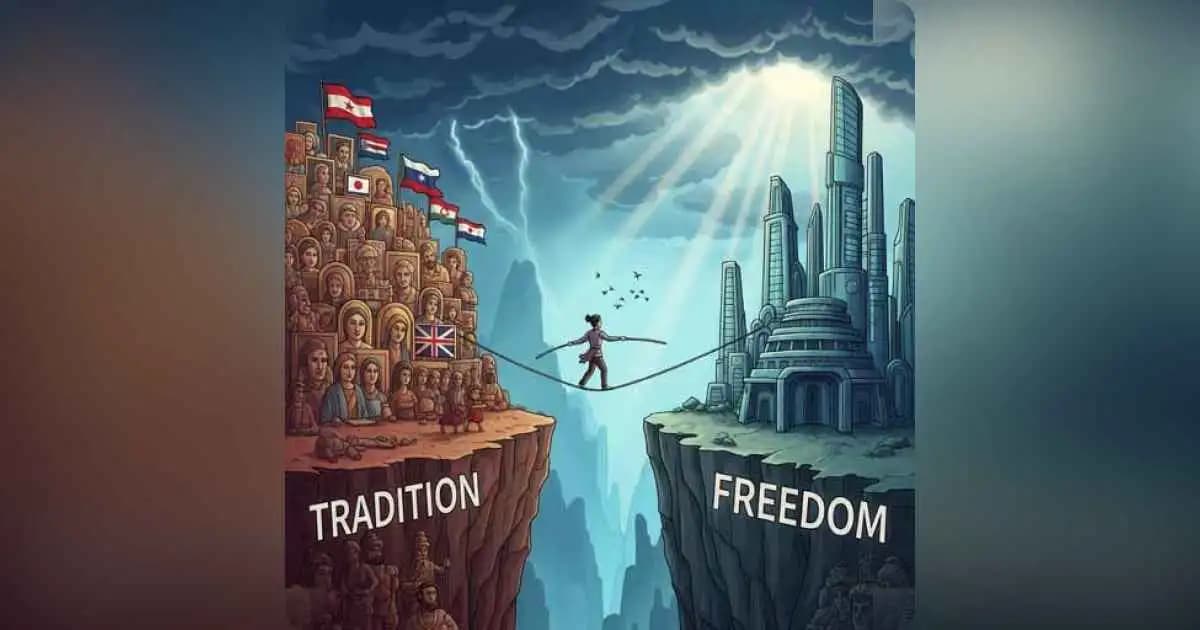




Every Culture carries a set of rules. Some are loud, printed in textbooks, echoed in prayers, or etched into wedding rituals. Others are quiet - like the unspoken rule that you must not disappoint your parents, or the invisible shame you feel when you choose yourself over tradition. This is what we call culture pressure - and for many of us, it's breaking us from the inside out.
Let’s begin where it usually hurts the most: at home
No one teaches us how to say "no" to our Culture (1). In many homes, obedience is praised. Sacrifice is romanticized. Choosing your own path? That’s rebellion. For children of immigrant families, or those raised in deeply traditional communities, the tension becomes a constant background hum.
You are expected to become someone - a doctor, a dutiful daughter, a respectable husband - and these roles are carved long before you even learn to walk. There is no syllabus for authenticity. There is no roadmap for emotional freedom. Instead, there’s the performance of Culture.
“Don’t forget who you are.”
That phrase has followed me my entire life. It was whispered in family gatherings when I wore jeans instead of a salwar. It was hurled like a weapon when I questioned why boys had freedom and girls had curfews. It was offered as concern, as guilt, as correction.
But what if I haven’t forgotten who I am - what if I’m trying to remember a version of me that exists beyond what I’ve inherited?
Culture pressure lives in silence
It’s not just what people say. It’s what they don’t say. It’s when your uncle at the dinner table says, “You should get married soon,” and your parents don’t disagree. It’s when you come out as queer and no one brings it up again - as if silence will undo your truth.
Culture pressure often hides behind love. But love isn’t supposed to feel like performance. When we’re told to endure in the name of love, what we’re really being asked to do is shrink.
Here’s how one 28-year-old Indian woman described it:
"I felt like a guest in my own life. Every major decision - my college, my job, even who I date - had to go through my family’s emotional approval system. And when I finally pushed back, they said I was becoming ‘too western.’"
Journal prompt: Where have you compromised your truth just to keep peace?
The intersection of identity and inherited guilt
Culture isn’t just about celebration. It’s about inheritance - and sometimes what we inherit is burden. The guilt of having more freedom than our mothers. The guilt of moving out. The guilt of not becoming the kind of success story our parents dreamed of.
And guilt is a powerful silencer.
Many of us become fluent in emotional editing. We speak two languages: one for our family and one for our friends. We curate our behavior, mask our truth, laugh when we want to scream.
That’s why this isn’t a story about rebellion. It’s about survival.
Navigating culture pressure as a freelancer or creator
There’s a reason so many creative people come from conflict. When the system doesn’t make space for you, you build your own. Many freelancers, creators, and remote workers have chosen a path not sanctioned by tradition - and that comes at a price.
You’ll hear things like:
- “Is that a real job?”
- “When will you settle down?”
- “What about job security?”
What they don’t see is the courage it takes to bet on yourself. What they don’t understand is the emotional labor of constantly justifying your choices.
But there is also liberation here. Freelancing, when done with purpose, isn’t just economic freedom - it’s emotional reclamation. It’s choosing to write your own definition of success.
Read more on how side hustles are reshaping identity: Beyond the glamour - the hard truth about building a profitable side hustle
Digital lives, cultural expectations
Social media adds another layer. Now culture pressure is performative - you’re not just doing things for your family but also for an audience. Everyone is watching. Comparing. Judging.
You post a photo in a swimsuit - and someone sends it to your uncle.
You write about therapy - and a cousin says, “Don’t air dirty laundry.”
You stay single - and distant relatives make it their business.
And yet, many of us continue. Not because we’ve rejected our culture, but because we’re trying to redefine it.
The courage to redefine culture
Culture isn’t meant to be static. It’s not a museum artifact. It evolves - through language, through migration, through discomfort.
The Gen Z and millennial generations are no longer accepting suffering as noble. We are unlearning - not because we hate tradition, but because we love truth.
We are learning to:
- say no with love
- choose rest over burnout
- ask better questions
- create third spaces between heritage and healing
Explore how Gen Z is reclaiming silence and self-connection: Logged out to tune in - why Gen Z is craving offline healing
Reflection questions for readers:
- What part of your culture feels like home?
- What part feels like a performance?
- Where have you mistaken silence for respect?
- Who would you be without guilt?
And in last:
Culture pressure doesn’t always shout. Sometimes it shows up as a smile that hides a wound. A career that feels like a cage. A wedding that felt more like a compromise than a celebration.
But naming it is the first act of rebellion. And rewriting it - slowly, lovingly, imperfectly - might be the bravest thing we ever do.
Read more on rewriting your own version of freedom: Freelancing freedom - rewriting success on your own terms