


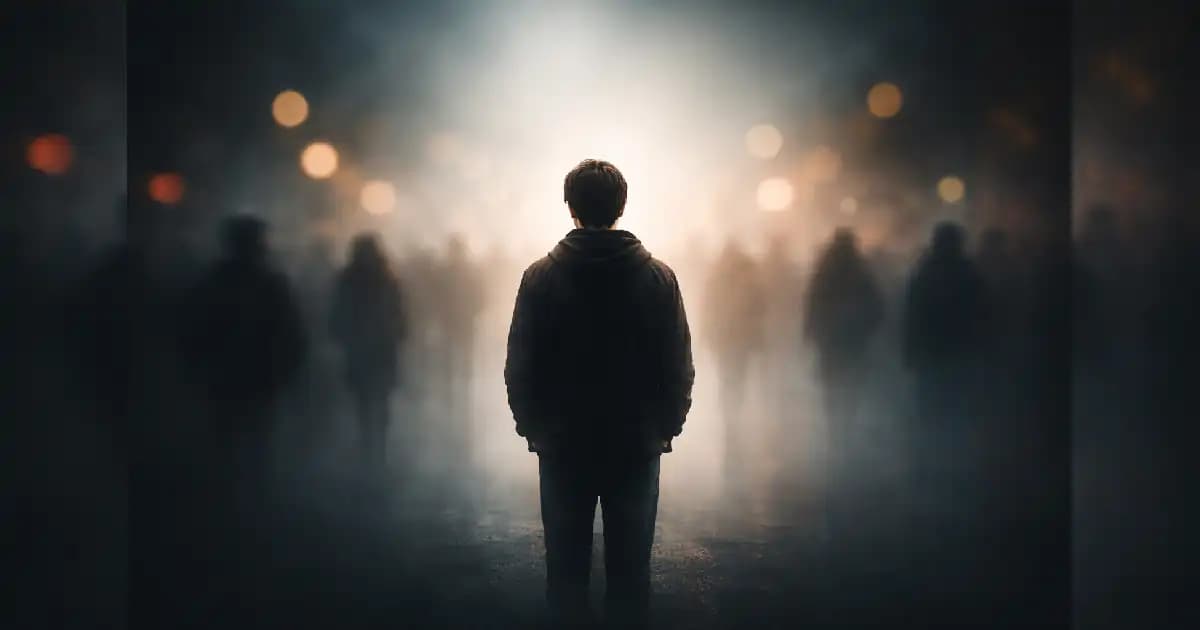
Identity crisis is one of those phrases people whisper to themselves at night, scrolling through old photos, wondering when life started to feel slightly off-script. It’s not always dramatic. Often, it’s quiet. A low, persistent sense that the version of you on the outside no longer matches what’s happening inside.
For many people today, this feeling isn’t tied to one big failure or turning point. It shows up gradually after a career change that didn’t feel as fulfilling as promised, after relationships end, after achieving goals that were supposed to make everything click. You do what you’re “meant” to do, and yet something feels unfinished. Or worse, unfamiliar.
This isn’t a personal flaw. It’s a shared emotional condition of the time we’re Living in.
When the old map stops working
Most of us grow up following a rough map handed to us early on. Study hard. Choose a path. Build a life. Become someone recognizablesuccessful, stable, respectable. For a while, that map works. Or at least, it feels like it does.
Then the world changes. Sometimes faster than we can keep up.
Jobs that once defined Identity (1) become unstable or meaningless. Relationships no longer follow predictable timelines. Social roles blur. Even age markerswhat “thirty” or “forty” is supposed to look likeno longer hold the same certainty. When the external structure shifts, the internal sense of self often lags behind.
An identity crisis often begins right there, in the gap between expectation and reality. The problem isn’t that people lack identity. It’s that the identities they were given don’t fit the lives they’re actually living.
The pressure to be “someone” at all times
Modern life doesn’t leave much room for not knowing who you are. Social platforms encourage constant self-definition: your bio, your brand, your opinions, your aesthetic. Even uncertainty gets packaged into something presentable.
But real identity is messier than a curated profile. It evolves in pauses, contradictions, and phases that don’t translate well into neat labels. When people feel pressured to present a coherent version of themselves at all times, internal confusion turns into quiet shame.
You start asking questions you don’t admit out loud.
Why don’t I feel connected to the life I built?
Why do my interests feel temporary?
Why does everyone else seem more certain than I am?
The irony is that many people asking these questions are deeply self-aware. They’re not lost because they don’t care. They’re lost because they care too much to settle for a version of themselves that feels false.
Why this feeling is so widespread right now
There’s a reason this sense of disorientation feels collective rather than individual.
We live in an era where identities are less inherited and more constructed. In the past, roles were narrower but clearer. Today, possibility is endlessand exhausting. You’re told you can be anything, but rarely guided on how to choose without regret.
At the same time, comparison has become ambient. You’re not just measuring yourself against people you know, but against countless parallel lives unfolding online. Different careers. Different timelines. Different versions of “success.” Every option you don’t choose becomes a quiet question mark.
This creates a specific kind of anxiety: not fear of failure, but fear of choosing the wrong self.
An identity crisis thrives in that environment. It’s not just about confusionit’s about overload.
The hidden grief behind identity loss
One part of this experience that doesn’t get talked about enough is grief. Not the obvious kind, but the subtle mourning of who you thought you’d be.
People grieve unrealized versions of themselves all the time. The artist who became practical. The confident person who grew cautious. The younger self who believed things would feel clearer by now.
This grief often hides beneath productivity, humor, or self-improvement. But it shows up in moments of stillness. In the sense that something meaningful was left behind, even if you can’t fully name it.
Recognizing that grief matters. Without acknowledging it, people often rush to reinvent themselves too quicklynew goals, new personas, new identitieswithout understanding what they’re actually trying to recover.
Identity isn’t a destination, it’s a relationship
One of the biggest misconceptions fueling identity crises is the idea that identity is something you “figure out” once and then maintain. In reality, identity behaves more like a relationship than a conclusion.
It responds to life events. It stretches under pressure. It changes tone over time. When people expect permanent clarity, any period of doubt feels like failure instead of transition.
Periods of feeling lost are often signals, not symptoms. They show up when old narratives stop working and new ones haven’t formed yet. That in-between space is uncomfortable, but it’s also where growth happensquietly, without announcements.
The problem is that modern culture treats this phase as something to fix quickly rather than sit with thoughtfully.
The risk of outsourcing your sense of self
When internal clarity feels shaky, it’s tempting to borrow identity from external sources. Work titles. Relationships. Ideologies. Online communities. These can provide temporary grounding, but they come with risk.
If your sense of self depends entirely on something external, any change becomes destabilizing. A job loss feels like personal erasure. A breakup feels like losing your personality. A shift in belief feels like betrayal of who you were.
An identity crisis often intensifies when people realize they’ve built themselves around structures that were never designed to hold a whole person.
This doesn’t mean external roles are meaningless. It means they can’t be the foundation. Identity needs room to breathe beyond function.
Why not knowing can be an honest place to stand
There’s a quiet strength in admitting you don’t fully know who you are right now. Not in a dramatic, existential waybut in a grounded, honest one.
Uncertainty can be a pause rather than a collapse. It can create space to notice what actually matters when performance drops away. What conversations energize you. What values persist even when circumstances change. What parts of you feel durable rather than impressive.
Many people who move through an identity crisis don’t emerge with a sharper label. They emerge with a softer relationship to themselves. Less rigid. Less performative. More forgiving.
That shift is subtle, but profound.
The future of identity in an unstable world
As the world becomes more unpredictable, identity will likely continue to feel less fixed and more fluid. This isn’t a failure of characterit’s an adaptation.
The future may belong less to people with perfectly defined selves and more to those who can tolerate ambiguity without panic. People who can revise their stories without erasing themselves. People who understand that being human isn’t about consistency, but coherence over time.
An identity crisis, in that sense, may not be something to avoid. It may be part of learning how to live honestly in a world that keeps changing its rules.
Sitting with the question instead of rushing the answer
There’s pressure to resolve discomfort quickly. To turn confusion into clarity. To brand the mess into something presentable. But some questions don’t want immediate answers.
“Who am I?” isn’t a puzzle to solve once. It’s a conversation you return to at different stages of life. Sometimes with confidence. Sometimes with doubt. Sometimes with humility.
Feeling lost doesn’t mean you’re broken. Often, it means you’re paying attention.
And in a culture that rewards certainty over self-awareness, that might be the most grounded place you can stand.
FAQs
Is an identity crisis a mental health condition?
Not necessarily. It’s a psychological experience, not a diagnosis. While it can overlap with anxiety or depression, many people experience identity confusion during normal life transitions.
At what age do identity crises usually happen?
They can happen at any age. While often associated with adolescence or early adulthood, many people experience them in their 30s, 40s, or later during career, relationship, or life shifts.
Can social media make identity confusion worse?
Yes. Constant comparison and pressure to present a consistent self can intensify feelings of uncertainty, especially during periods of transition.
Is feeling lost a sign you made the wrong choices?
Not always. Feeling lost often reflects growth or changing values rather than failure. It can signal that your priorities are evolving.
How long does an identity crisis last?
There’s no fixed timeline. Some periods pass quickly, others unfold over years. What matters most is how thoughtfully the experience is integrated, not how fast it ends.