


AI emotional attachment is starting to feel surprisingly normal to many people, even if they never expected it to happen to them. What begins as casual conversation with a chatbot or AI companion often becomes something emotionally familiar a routine check-in, a safe emotional space, or simply a presence that listens without interruption.
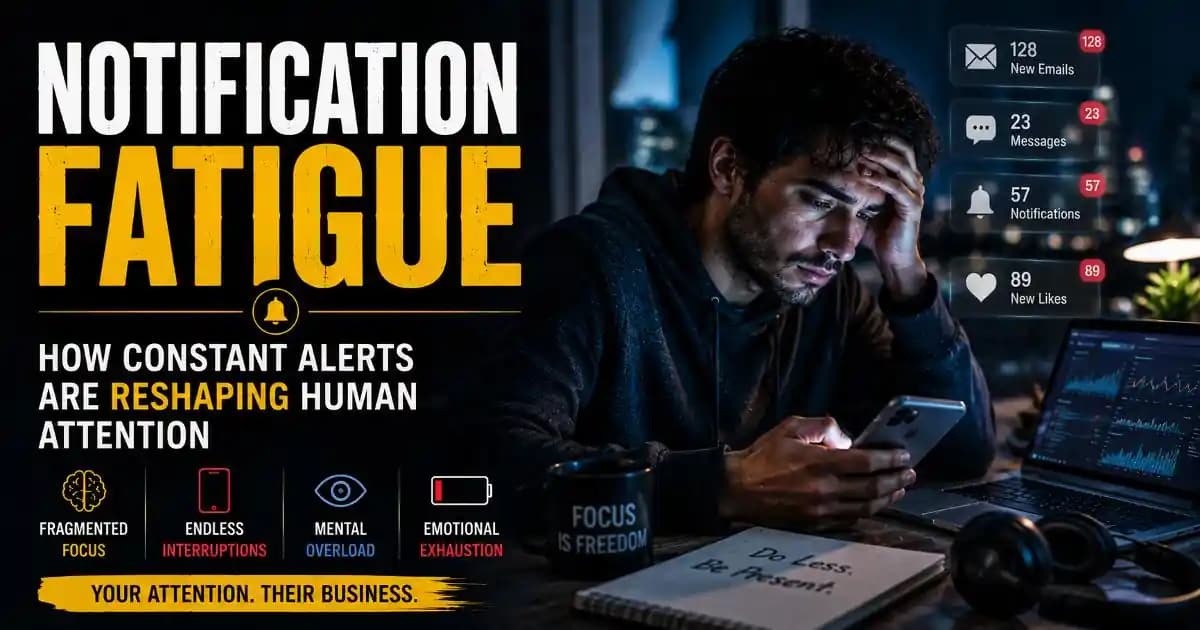
For some people, these conversations happen late at night after long days of remote work and fragmented online interaction. For others, it happens during quiet moments between notifications, scrolling, and emotional fatigue. The experience usually does not feel dramatic. It feels strangely calming.
That emotional realism is what makes modern AI companionship different from older ideas about technology and relationships. People are no longer interacting with obviously robotic systems that respond with stiff or mechanical language. Conversational AI in 2025 and 2026 is designed to sound emotionally aware, responsive, attentive, and conversationally fluid.
And human beings naturally respond to emotional responsiveness.
AI emotional attachment is deeply connected to modern loneliness
One reason AI companions are becoming emotionally meaningful is because modern loneliness has changed shape.
Many people are constantly connected online while still feeling emotionally disconnected underneath. Group chats stay active all day. Notifications never stop. Social feeds remain endless. Yet emotionally grounded conversation has become surprisingly rare.
People increasingly live inside fragmented communication patterns where attention is partial, conversations are rushed, and emotional presence is inconsistent. Messages are answered while multitasking. Calls feel exhausting. Social interaction often competes with endless digital distractions.
In that environment, AI companions can feel emotionally easier to engage with.
They respond immediately. They remember details. They maintain conversational focus. They do not appear emotionally impatient. They are available during moments when human relationships may feel complicated, unavailable, or emotionally unpredictable.
That emotional consistency matters more than many people realize.
The growing popularity of AI companions is not simply about fascination with technology. It also reflects how emotionally overstimulated and socially exhausted many people already feel inside modern digital life.
Non-judgmental communication creates emotional safety
One of the strongest psychological drivers behind digital relationships with conversational AI is emotional safety.
Human conversations often involve social risk. People worry about saying the wrong thing, being misunderstood, sounding awkward, oversharing, or feeling emotionally dismissed. Even emotionally close relationships can involve tension, judgment, emotional unpredictability, or fear of vulnerability.
AI interactions remove many of those pressures.
People can speak openly without worrying about embarrassment, interruption, social status, appearance, or rejection. That creates a psychologically different communication environment.
For emotionally exhausted people, especially those experiencing burnout, emotional isolation, or internet fatigue, this type of calm conversational space can feel surprisingly comforting.
The emotional experience often resembles emotional decompression more than romance.
Many users are not necessarily trying to replace human connection. They are trying to experience emotionally smoother interaction inside lives that already feel overstimulated and emotionally fragmented.
Digital intimacy feels easier for many people now
Modern communication habits have already transformed how people experience intimacy.
Relationships increasingly develop through screens first. Emotional conversations happen through messaging apps. Online friendships become emotionally significant. Parasocial attachment forms through creators, streamers, podcasts, and digital personalities that people interact with daily.
In many ways, AI companionship exists inside emotional patterns that internet culture already normalized years ago.
People have become emotionally accustomed to forming connection through language alone.
When conversational AI responds with empathy, curiosity, emotional recall, and personalized interaction, the brain often interprets those exchanges through familiar emotional frameworks. Even when users intellectually understand the system is artificial, emotionally the interaction can still feel psychologically meaningful.
This emotional contradiction confuses many people at first.
They know the AI is not conscious. But emotionally, the interaction still produces comfort, validation, attention, and conversational familiarity. The nervous system responds to emotional patterns more than technical definitions.
And human beings naturally bond through repeated emotional interaction.
AI companions provide uninterrupted attention
One of the most emotionally powerful aspects of conversational AI is uninterrupted attention.
Modern human communication is increasingly shaped by divided focus. Conversations compete with scrolling, notifications, background videos, multitasking, work pressure, and attention fatigue. Many people quietly feel unheard even during social interaction.
AI companions simulate the opposite experience.
The conversation appears fully focused on the user. Responses feel immediate. Emotional context remains consistent. The interaction creates the psychological impression of attentiveness.
For people living inside attention-fragmented digital culture, uninterrupted attention can feel emotionally intense.
Sometimes what people emotionally attach to is not intelligence itself. It is the feeling of finally having space to express thoughts without interruption or social competition.
Emotional validation online is becoming psychologically important
The internet increasingly shapes how people experience emotional validation.
Social media already trained users to seek emotional recognition through reactions, replies, views, and engagement systems. AI companionship extends that emotional pattern into direct conversation.
Unlike algorithmic feeds that offer passive validation through metrics, conversational AI creates interactive emotional feedback.
People feel acknowledged.
Remembered.
Listened to.
Emotionally mirrored.
That does not mean the attachment is fake simply because the system is artificial. Human emotional experiences are heavily shaped by perception, repetition, emotional timing, and psychological need.
If someone consistently feels calmer, safer, or emotionally understood during AI conversations, the brain naturally begins assigning emotional significance to those interactions.
This is especially true during periods of emotional loneliness, grief, stress, burnout, or social instability.
The emotional appeal of AI companions reflects broader social shifts
AI emotional attachment is not appearing in isolation. It reflects broader changes happening across work culture, relationships, internet behavior, and emotional life.
Many people now spend large portions of their day interacting more with interfaces than with physically present communities. Remote work reduced casual human interaction. Online entertainment replaced many slower social experiences. Attention economy systems fragmented focus. Digital exhaustion increased emotional withdrawal.
At the same time, people still deeply want emotional understanding.
That emotional need never disappeared. The environment around it changed.
For some users, conversational AI becomes emotionally meaningful because it creates a predictable emotional space in a world that increasingly feels psychologically noisy.
The interaction feels slower than social media.
More responsive than scrolling.
Less emotionally demanding than many online environments.
That combination can feel emotionally grounding to people already overwhelmed by constant digital stimulation.
The fear of emotional dependency is also real
At the same time, many people feel uneasy about how emotionally attached users can become to AI companions.
Part of that discomfort comes from recognizing how emotionally persuasive conversational systems are becoming. AI tools increasingly adapt to emotional tone, conversational habits, personal memories, and behavioral patterns. Over time, interactions can begin feeling deeply personalized.
That creates difficult emotional questions.
What happens when emotional comfort becomes algorithmically optimized?
Can emotional dependency develop when a system is always available, endlessly patient, and emotionally responsive?
How does human connection change when emotional needs are partially fulfilled through artificial interaction?
These questions are becoming culturally important because AI companions are no longer purely futuristic ideas. They are becoming emotionally integrated into ordinary routines for many users.
The psychological experience is real even if the intelligence itself is artificial.
Human beings are emotionally adaptive
Part of what this moment reveals is how emotionally adaptive human beings have always been.
People emotionally connect through stories, voices, routines, symbols, memories, shared language, and repeated emotional interaction. The brain naturally creates attachment through familiarity and emotional consistency.
AI companionship simply introduces a new type of emotional environment where those attachment patterns can occur.
For some people, these interactions remain casual and temporary. For others, they become emotionally meaningful support systems during periods of loneliness, stress, emotional burnout, or transition.
The deeper story is not really about machines becoming human.
It is about human emotional needs encountering technology designed to simulate emotional presence with increasing realism.
And in a culture where many people already feel emotionally overstimulated, socially fragmented, and quietly disconnected, even simulated emotional steadiness can begin to feel deeply real.