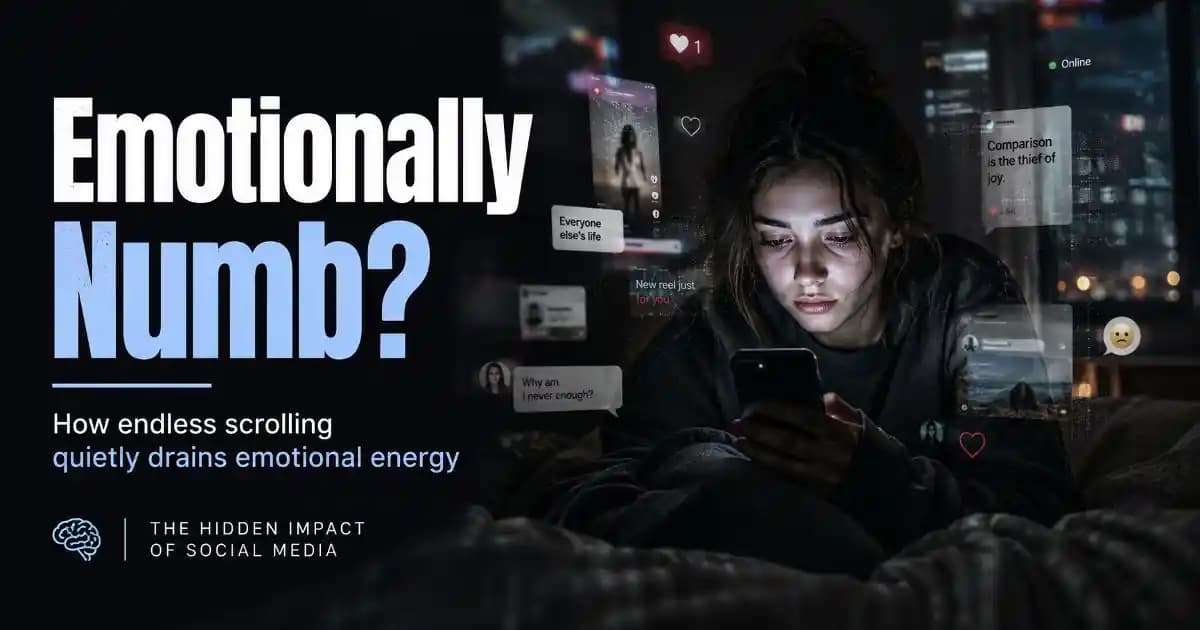



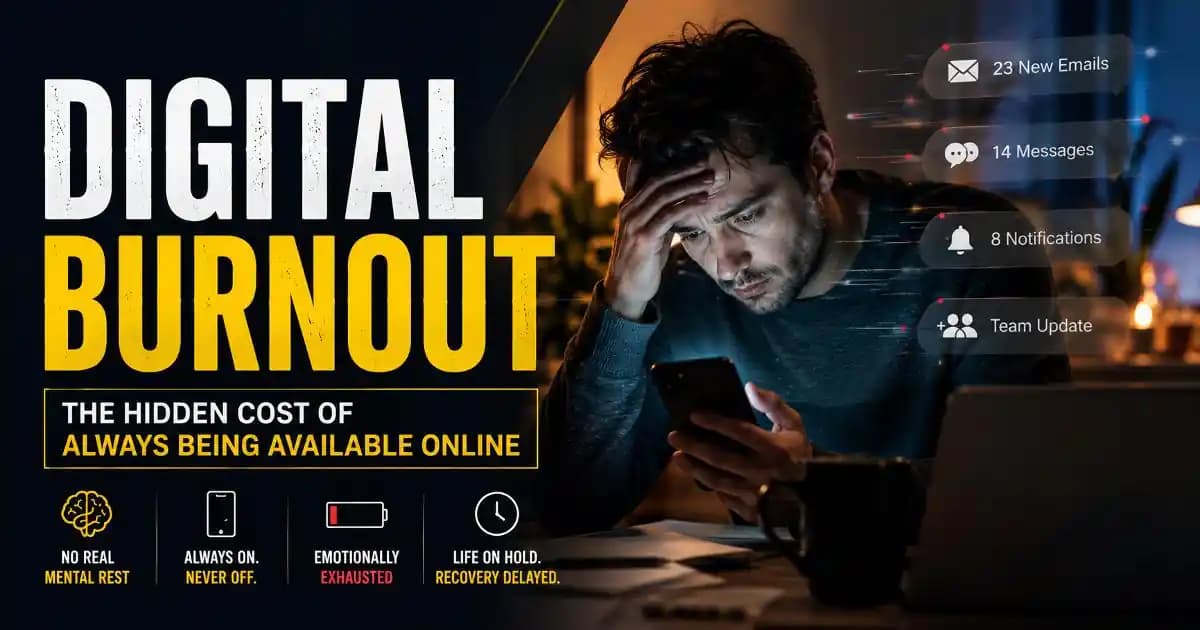
Digital burnout often begins in ways that seem completely normal now. Someone checks work messages during dinner. Replies to notifications before falling asleep. Answers emails on weekends. Keeps conversations going across multiple apps all day. Stays reachable at all times because modern life quietly expects constant availability.
At first, this level of connection can feel productive, responsible, or socially necessary.
But over time, many people begin noticing a deeper emotional exhaustion underneath their daily routines.
The nervous system rarely feels fully off anymore.
Even moments that look like rest often contain low-level psychological alertness. A phone nearby. Notifications waiting. Conversations continuing. Work remaining partially open in the background of the mind.
Modern Digital culture normalized a version of life where people are emotionally reachable almost all the time.
And increasingly, many are realizing that constant accessibility comes with hidden emotional consequences.
Why permanent availability feels emotionally draining
Human beings were not psychologically designed to maintain continuous social and professional accessibility.
Historically, communication contained natural limits. Conversations paused. Work ended physically. Distance created emotional separation. Silence existed more naturally between interactions.
Digital life removed many of those boundaries.
Now communication follows people everywhere through smartphones, remote work systems, social platforms, creator ecosystems, and algorithm-driven engagement loops.
People often move through entire days without experiencing true psychological disconnection.
This creates a low-level emotional vigilance that slowly accumulates inside the nervous system.
Part of the brain remains partially alert because someone, somewhere, might need a response at any moment.
Even when no immediate stress exists, constant accessibility can quietly prevent full emotional recovery.
The nervous system no longer experiences enough closure
One reason digital burnout feels emotionally confusing is because many people are physically resting while mentally remaining open.
Work no longer ends clearly for many remote workers and digitally connected professionals. Conversations no longer pause naturally. Notifications create tiny emotional interruptions throughout the day.
The brain rarely experiences complete closure.
This matters psychologically because human emotional systems recover partly through separation and stillness.
Without clear endings, the nervous system struggles to fully shift out of alert mode.
Someone watches a movie while half-checking messages. Lies in bed while scanning notifications. Takes vacations while answering work chats. Eats meals while emotionally monitoring digital conversations.
Over time, many people stop recognizing what genuine mental absence from work, social obligations, or digital attention even feels like anymore.
The attention economy rewards constant responsiveness
The modern attention economy depends heavily on continuous engagement.
Platforms reward quick replies, consistent activity, immediate reactions, visible presence, and permanent accessibility.
Online culture increasingly treats responsiveness as emotional reliability.
People feel pressure to answer quickly, remain updated, stay visible, and maintain ongoing digital participation. Delayed responses can trigger anxiety, guilt, social misunderstanding, or fear of seeming emotionally distant.
This creates subtle emotional pressure that many people carry unconsciously throughout the day.
The emotional brain begins associating silence with social risk.
As a result, many individuals rarely experience uninterrupted psychological quiet without feeling internally pulled back toward digital connection.
Why digital burnout often feels emotionally invisible
Unlike physical exhaustion, digital burnout can feel difficult to identify clearly because it builds gradually through small emotional interruptions rather than dramatic events.
Someone may continue functioning normally while internally feeling increasingly overstimulated, emotionally flat, impatient, distracted, or mentally fatigued.
Many people quietly notice symptoms like:
Difficulty relaxing without checking devices.
Feeling mentally tired after “doing nothing.”
Emotional irritability during quiet moments.
Trouble focusing deeply.
Feeling emotionally unavailable despite constant communication.
A strange sense of emotional emptiness after long days online.
This exhaustion often goes unnoticed because modern culture normalized permanent stimulation as ordinary life.
Relationships are changing under nonstop accessibility
Constant availability also reshapes relationships in subtle ways.
People communicate more frequently than ever before, but communication quality often becomes fragmented by distraction and divided attention.
Conversations compete against feeds, notifications, work messages, algorithmic content, and emotional overstimulation.
Many people are technically present while psychologically elsewhere.
This creates emotional contradictions inside relationships.
Partners remain reachable all day but still feel emotionally disconnected. Friends exchange endless short interactions while rarely experiencing sustained emotional presence. Families spend time together while everyone remains partially absorbed by separate digital worlds.
The nervous system still craves moments where attention feels fully undivided.
Without enough of those experiences, emotional closeness can begin feeling thinner even when communication frequency remains high.
Why people struggle to stop checking their phones
One of the most misunderstood aspects of digital burnout is that constant checking behavior is not always driven by pleasure.
Often it is driven by emotional conditioning.
Modern digital systems train people to anticipate interruption continuously. Notifications, updates, messages, algorithmic feeds, creator content, work communication, and social validation all create small cycles of psychological anticipation.
The nervous system becomes accustomed to monitoring for incoming stimulation.
This is partly why many people instinctively reach for devices during silence, boredom, uncertainty, emotional discomfort, or brief pauses in attention.
The behavior becomes automatic long before people consciously notice how emotionally dependent the habit has become.
AI-driven communication is increasing emotional pressure
The rise of AI-enhanced digital ecosystems is intensifying this culture of constant responsiveness even further.
AI tools accelerate communication speed, content production, customer expectations, productivity workflows, and social interaction cycles.
People increasingly feel pressure to keep up with systems that never fully pause.
As digital communication becomes faster and more optimized, human emotional rhythms often struggle to match that pace naturally.
Many individuals quietly feel guilty for needing emotional space because modern internet culture rewards continuous participation.
The emotional expectation becomes permanent availability rather than sustainable presence.
Why emotional recovery now requires intentional absence
One reason digital burnout has become so widespread is because modern life leaves very little room for true psychological absence.
Many people rarely experience moments where nobody expects immediate access to their attention.
But emotional recovery often depends on temporary disconnection.
The nervous system needs periods where it no longer monitors incoming information, social demands, emotional reactions, or digital stimulation continuously.
This partly explains why activities like walking without notifications, spending time offline, reading quietly, taking device-free breaks, having uninterrupted conversations, or simply sitting without digital input can feel surprisingly restorative.
These moments allow attention to settle naturally instead of remaining fragmented across multiple emotional demands.
For many people, true rest now feels less like entertainment and more like the rare experience of finally not being emotionally reachable for a while.
Digital burnout is becoming a defining emotional experience
The hidden emotional cost of always being available online is not simply about screen time.
It reflects a deeper cultural shift in how modern digital life reshaped emotional boundaries, attention, communication, relationships, and psychological recovery.
Human beings still need silence, closure, separation, emotional spaciousness, and moments where attention no longer belongs to everyone else.
But internet culture increasingly treats uninterrupted availability as normal.
Eventually, many nervous systems begin showing signs of strain through emotional exhaustion, attention fatigue, irritability, numbness, or quiet psychological depletion.
The important thing is recognizing that this experience is becoming increasingly common.
Many people are not emotionally weak or incapable of handling modern life. They are trying to emotionally adapt to environments that rarely allow the mind to fully rest.
And increasingly, people are beginning to realize that protecting emotional wellbeing in the digital age may require something modern culture quietly discourages: the ability to become temporarily unavailable again.