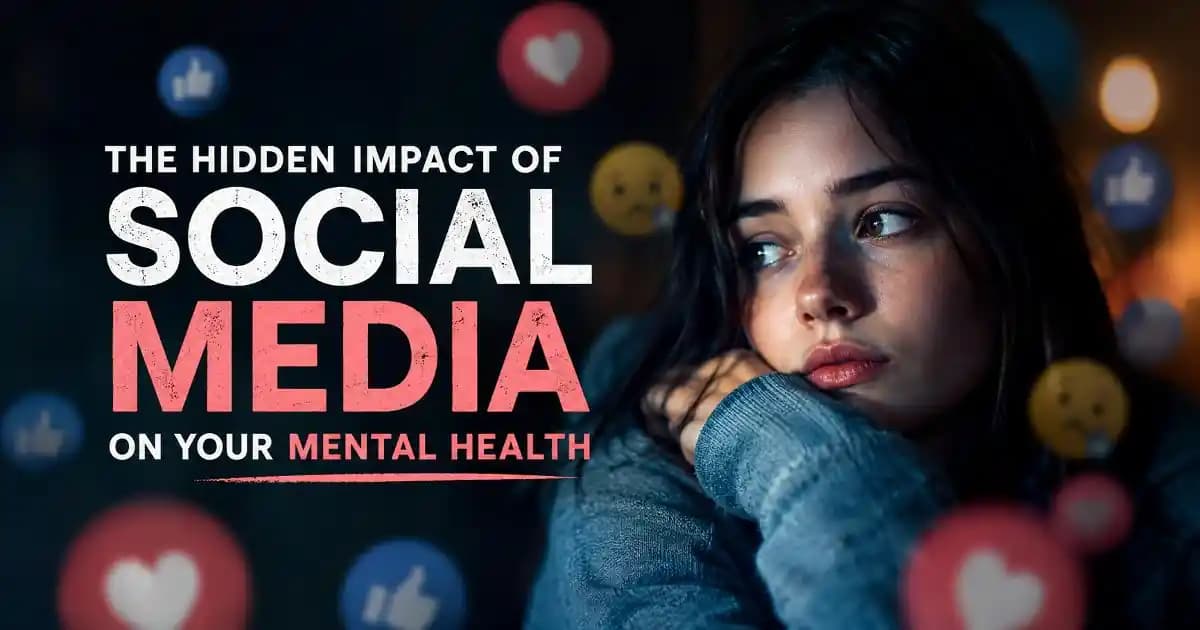



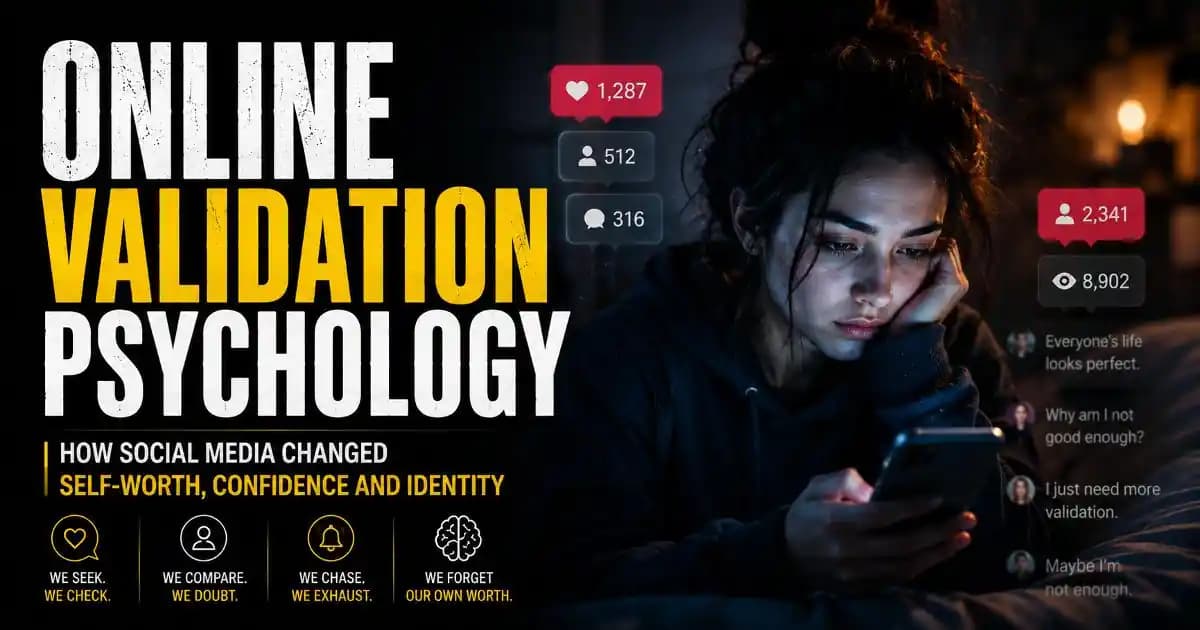
Online validation psychology became part of everyday life so gradually that many people barely noticed how deeply it started shaping emotions, confidence, identity, and self-worth.
Someone posts a photo, checks reactions ten minutes later, then checks again an hour later without fully realizing why the response matters emotionally. Another person shares an opinion online and quietly feels unsettled when it receives less attention than expected. Someone else starts questioning their appearance, success, personality, or relevance after scrolling through highly curated lives for too long.
These experiences now feel normal.
But emotionally, they reflect a major psychological shift in how human beings experience social validation.
For most of human history, validation came through smaller and slower social environments: friendships, families, workplaces, communities, and direct human interaction. Now validation increasingly arrives through metrics, visibility, engagement, and algorithmic attention.
And because those systems operate continuously, many people now experience validation as something they must constantly monitor, maintain, and emotionally manage.
Why social media changed validation so deeply
Human beings naturally care about social feedback.
The emotional brain evolved to pay attention to belonging, recognition, approval, attention, and social acceptance because historically those things affected survival, safety, and identity.
Social media amplified those emotional instincts dramatically.
Platforms transformed social validation into something visible, measurable, immediate, and public. Likes, views, shares, reposts, comments, follower counts, story reactions, and engagement metrics turned emotional recognition into a constantly updating digital signal.
This changed how many people emotionally interpret themselves online.
Validation no longer feels occasional for many users. It feels continuous.
People begin unconsciously tracking emotional worth through visibility patterns: who responds, who watches, who engages, who ignores, and how algorithmic attention fluctuates.
Even individuals who intellectually understand these systems still experience emotional reactions to them because the nervous system naturally responds to social feedback.
The attention economy made visibility emotionally powerful
The modern attention economy depends heavily on emotional engagement.
Platforms are designed to reward content that attracts attention quickly because attention drives advertising, data collection, and platform growth.
As a result, visibility itself became emotionally valuable.
People increasingly feel socially present when they are seen online and emotionally invisible when they are not.
This subtle emotional conditioning affects behavior more deeply than many realize.
Some people begin editing personality traits for engagement. Others become more performative online. Some slowly tie confidence to reactions and reach. Others quietly experience anxiety whenever attention drops.
Even people who rarely post content absorb these emotional patterns by constantly observing which lifestyles, appearances, personalities, and opinions receive validation online.
The emotional environment itself shapes self-perception.
Why online validation feels emotionally addictive
One reason social media validation feels psychologically powerful is because it arrives unpredictably.
The brain responds strongly to intermittent rewards. Sometimes a post receives attention quickly. Sometimes it does not. Sometimes visibility spikes unexpectedly.
This unpredictability keeps emotional attention attached to feedback systems.
People refresh apps repeatedly without always consciously understanding why.
The emotional anticipation becomes part of the experience itself.
For many users, validation no longer feels like a simple emotional bonus. It quietly becomes part of emotional regulation.
A successful post can temporarily increase confidence, social energy, or emotional reassurance. Low engagement can create subtle disappointment, self-doubt, emotional comparison, or feelings of invisibility.
This emotional dependence often develops gradually rather than dramatically.
Comparison culture intensified emotional insecurity
Social media also changed validation by exposing people to endless comparison environments.
Human beings historically compared themselves within relatively small social circles. Modern platforms expose users to thousands of carefully curated identities constantly.
Someone else always appears more attractive, more productive, more socially connected, more emotionally fulfilled, more successful, or more visible online.
Even when people know content is filtered and selective, the emotional brain still absorbs repeated comparison signals.
Over time, many individuals quietly begin measuring themselves against unrealistic emotional standards.
This creates a subtle but persistent feeling of psychological insufficiency.
People increasingly feel pressure not only to live life, but to appear emotionally interesting, visually appealing, socially relevant, and publicly validated while living it.
Validation became tied to identity performance
One of the biggest psychological shifts in internet culture is that identity itself increasingly became performative.
People do not only share experiences online anymore. They often experience life while simultaneously imagining how it will appear digitally.
A vacation becomes content. A relationship becomes visible branding. Opinions become identity signals. Emotional vulnerability becomes engagement material. Achievements become public performance.
This does not necessarily mean people are fake.
It means modern digital environments reward visibility so strongly that many people unconsciously shape identity around attention systems.
Over time, this can create emotional confusion between authentic self-worth and externally rewarded identity.
Some individuals begin feeling emotionally disconnected from themselves because too much attention shifts toward managing perception rather than experiencing life privately.
Why younger generations feel this pressure more intensely
Younger generations grew up inside algorithm-driven validation systems during emotionally formative years.
For many, online visibility became intertwined with identity development, social belonging, attractiveness, popularity, and emotional self-perception from an early age.
That creates psychological pressure older generations often underestimate.
Teenagers and young adults now navigate social environments where emotional feedback is quantified publicly and constantly. Approval becomes numerically visible. Comparison never fully pauses. Visibility fluctuates daily.
The emotional impact of this environment accumulates over time.
Many younger users quietly experience attention fatigue, emotional burnout, validation anxiety, and self-esteem instability linked to algorithmic social systems.
And because these patterns became culturally normalized, people often blame themselves personally instead of recognizing the larger emotional structure surrounding them.
AI-generated culture is changing validation even further
The rise of AI-generated content is intensifying online validation psychology in new ways.
People now compete emotionally against increasingly polished digital environments filled with AI-enhanced aesthetics, synthetic influencers, hyper-optimized content strategies, algorithmically refined emotional hooks, and artificial engagement systems.
The emotional brain still compares itself to these environments even when users intellectually know parts of them are manufactured.
This creates emotional pressure that can feel strangely exhausting.
Many people increasingly feel that ordinary human life appears emotionally insufficient compared to endlessly optimized digital identities.
That pressure quietly reshapes confidence, attention, and emotional self-worth.
Why validation no longer fully satisfies people
One of the strangest emotional effects of modern validation systems is that they often create temporary reassurance without creating lasting emotional security.
Online attention moves too quickly.
Validation spikes briefly, then disappears into the endless movement of feeds and algorithms.
As a result, many people begin chasing repeated emotional reassurance through visibility instead of developing deeper emotional stability internally.
This creates cycles where users feel emotionally dependent on ongoing engagement while still feeling privately insecure underneath.
The nervous system receives stimulation without always receiving genuine emotional grounding.
That emotional gap explains why some people can appear highly visible online while quietly struggling with loneliness, anxiety, emotional exhaustion, or identity confusion offline.
Modern validation culture changed emotional presence itself
Another subtle shift is that many people now experience life partially through imagined audience perception.
Moments are filtered mentally through visibility before they are fully lived emotionally.
People think about how events will appear online while experiencing them in real time. Emotional reactions become partially shaped by public interpretation. Silence feels socially risky. Invisibility feels emotionally uncomfortable.
This creates low-level psychological self-monitoring that follows people throughout digital life.
Eventually, emotional presence becomes harder to sustain because attention remains divided between living and presenting.
Why people are beginning to question online validation culture
A growing number of people are quietly recognizing that endless external validation does not automatically create emotional peace.
Not because attention is meaningless. Human beings naturally want recognition, appreciation, and connection.
But modern internet culture transformed those emotional needs into nonstop algorithmic systems that rarely allow the nervous system to fully settle.
People increasingly crave forms of self-worth that feel less dependent on constant visibility.
They miss private experiences, emotionally present relationships, slower emotional rhythms, and identities that do not require continuous performance.
The deeper conversation around online validation psychology is ultimately not about social media alone.
It is about what happens emotionally when human beings begin measuring identity, belonging, and self-worth inside systems designed to keep emotional attention continuously active.
And increasingly, many people are beginning to realize that emotional wellbeing in the digital age may partly depend on learning how to feel valuable even when nobody is watching.