


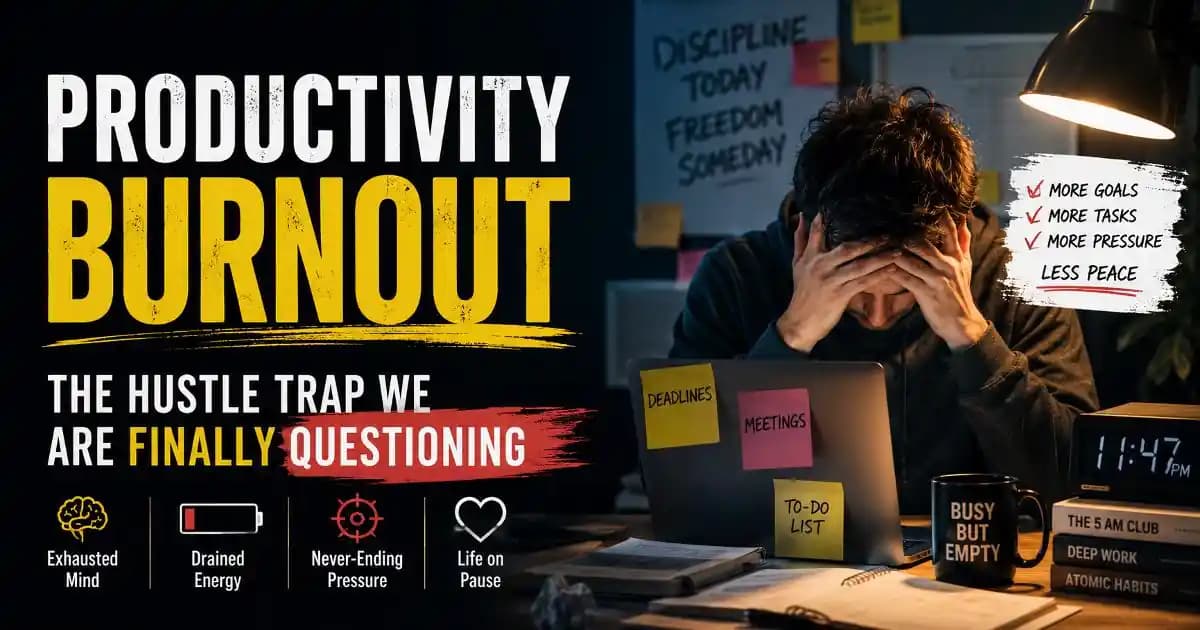
Productivity burnout no longer looks like dramatic collapse for many people. More often, it looks like answering emails while emotionally exhausted, feeling guilty during rest, or turning every free hour into another opportunity for optimization.
A growing number of people are quietly realizing that they no longer know how to exist without feeling pressure to improve something.
The pressure appears everywhere now. Morning routines become performance systems. Hobbies become side hustles. Exercise becomes content. Relaxation becomes “recovery optimization.” Even sleep gets tracked, scored, and analyzed.
Modern life increasingly treats human beings like ongoing productivity projects.
And at first, many people genuinely believed this mindset would make them feel more fulfilled. More disciplined. More successful. More in control.
Instead, a lot of people feel emotionally tired in ways they struggle to explain.
Not lazy. Not unmotivated. Just deeply overstretched by a culture that rarely allows the nervous system to fully rest anymore.
Why productivity culture became emotionally overwhelming
Productivity itself is not the problem.
Human beings naturally enjoy progress, purpose, creativity, achievement, and meaningful work. The problem is that modern productivity culture quietly removed the emotional boundaries around those things.
Work no longer stays at work.
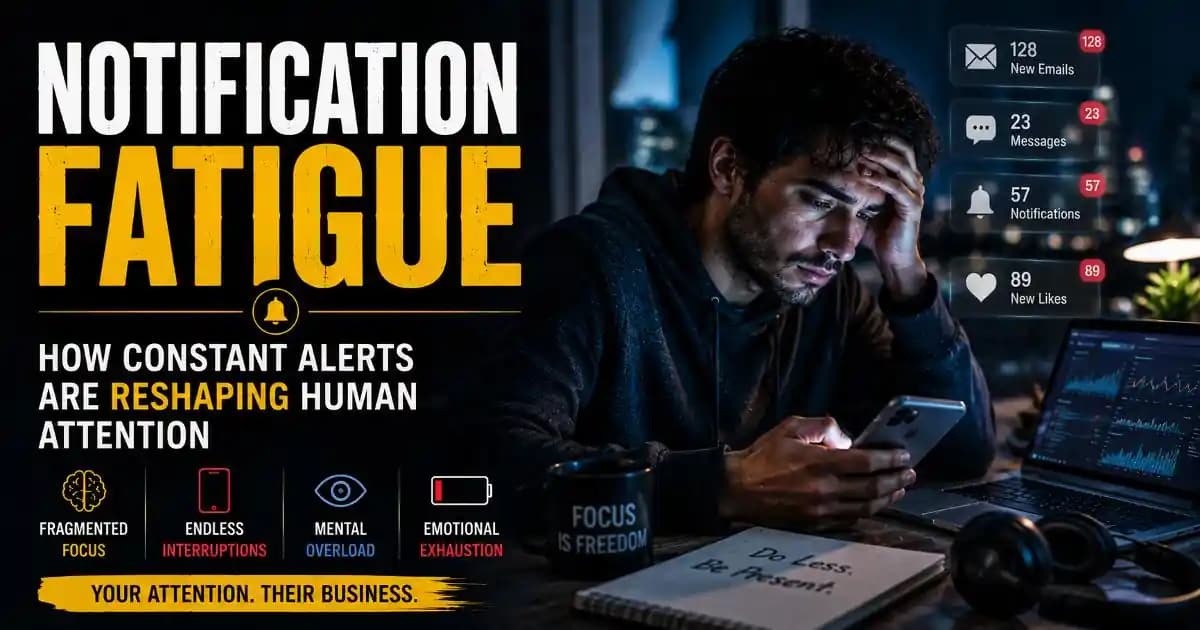
Notifications follow people home. Remote work blurs emotional separation between personal life and professional identity. Smartphones create constant accessibility. AI tools accelerate expectations. Social media exposes people to endless examples of hyper-optimized lifestyles.
As a result, many people now feel psychologically “on” all the time.
Even moments that appear restful often contain low-level mental productivity pressure underneath them.
Someone watches a video about improving discipline while eating dinner. Someone listens to career podcasts during walks. Someone turns personal reflection into content creation. Someone measures their worth through how efficiently they use every hour.
The emotional effect accumulates slowly.
The internet normalized constant self-optimization
One reason productivity burnout became so widespread is because online culture normalized endless self-improvement as a permanent lifestyle.
People are constantly exposed to routines, systems, habits, financial goals, creator success stories, AI-powered workflows, “high-performance” lifestyles, and optimization advice.
Much of this content sounds helpful individually.
But emotionally, the combined effect can create a subtle feeling that being ordinary is no longer acceptable.
Many people now carry quiet anxiety about wasting time, falling behind, or not maximizing their potential.
Even rest starts feeling emotionally suspicious.
This is especially true inside algorithm-driven platforms where extreme productivity receives more visibility than balanced living. The internet naturally amplifies emotionally intense lifestyles because they attract attention.
As a result, sustainable human rhythms often appear less visible online than exhaustion-driven achievement cycles.
People are becoming emotionally disconnected from rest
One of the clearest signs of productivity burnout is that many people struggle to relax without guilt.
Rest increasingly feels like something that must be justified, earned, optimized, or turned into future productivity.
People take breaks while secretly thinking about unfinished tasks. They go on vacation while checking work messages. They watch shows while multitasking online. They feel anxious during slow moments because their nervous systems have adapted to constant stimulation and output.
For some people, true stillness now feels emotionally uncomfortable.
The body often recognizes burnout before the mind fully accepts it.
People notice mental fog, emotional numbness, irritability, sleep disruption, attention fatigue, difficulty feeling motivated, or a strange sense of emptiness after achieving goals they once cared deeply about.
This is partly because constant productivity pressure slowly disconnects effort from emotional meaning.
When every moment becomes performance-oriented, the nervous system stops experiencing enough genuine recovery.
Why productivity burnout feels personal even when it is cultural
Many people interpret burnout as an individual failure.
They assume they are not disciplined enough, focused enough, motivated enough, or mentally strong enough to keep up.
But productivity burnout is increasingly connected to larger cultural systems rather than personal weakness.
The modern attention economy rewards constant engagement. Hustle culture romanticizes exhaustion. Online work culture encourages permanent accessibility. Creator culture monetizes visibility. AI acceleration increases expectations around speed and efficiency.
People are trying to emotionally adapt to environments that rarely stop demanding output.
That creates psychological strain even for highly capable individuals.
Many professionals, students, freelancers, creators, and remote workers quietly experience the same emotional contradiction: they are constantly busy yet increasingly emotionally detached from what they are doing.
This emotional disconnect is one reason productivity burnout feels so confusing. People often continue functioning externally while internally feeling exhausted.
The rise of “performative productivity”
Modern internet culture also changed how productivity itself is socially displayed.
Many people no longer simply work. They perform productivity publicly.
Online culture rewards visible discipline: aesthetic workspaces, early-morning routines, motivational content, optimized schedules, productivity tracking apps, and carefully curated “grind” lifestyles.
Some of this content genuinely inspires people. But it also creates emotional comparison pressure.
People begin measuring themselves against highly edited versions of other people’s work lives.
Someone else always appears more focused, more ambitious, more disciplined, more productive, or more emotionally in control.
Over time, this can create chronic feelings of inadequacy even among people who are already overworking themselves.
The emotional goalpost keeps moving.
And because productivity now overlaps with identity, slowing down can start feeling emotionally threatening instead of restorative.
AI tools are changing productivity expectations even further
The rise of AI-powered work culture is accelerating these emotional tensions.
Many people now feel pressure to work faster, produce more content, learn new tools constantly, automate tasks, and remain professionally competitive inside rapidly changing digital industries.
AI itself is not necessarily harmful. In many cases, it genuinely reduces repetitive work and improves efficiency.
But emotionally, AI acceleration also changes expectations.
When technology increases output speed, human beings often feel pressure to match that speed psychologically.
This creates a strange emotional environment where people increasingly feel behind despite working continuously.
The fear is no longer only about failure. For many, it is about becoming professionally irrelevant, emotionally replaceable, or unable to keep up with constantly evolving systems.
That low-level anxiety contributes heavily to modern productivity burnout.
Many people secretly miss slower emotional rhythms
One reason conversations around burnout resonate so deeply now is because many people quietly miss older emotional rhythms.
They miss doing things without documenting them. Working without constant digital interruption. Having hobbies that were not monetized. Resting without self-improvement pressure. Spending time without measuring efficiency.
People increasingly crave emotional spaciousness even if they do not always have language for it.
This helps explain why slower activities are becoming emotionally appealing again: reading physical books, walking without headphones, gardening, offline weekends, journaling, long conversations, creative hobbies, and moments without algorithmic stimulation.
These experiences allow attention to settle naturally instead of remaining continuously fragmented.
For many people, that psychological slowing down feels surprisingly emotional because the nervous system has been overstimulated for so long.
Human beings were never designed for endless output
The deeper issue beneath productivity burnout is that modern culture increasingly treats human energy as permanently expandable.
But emotional energy does not work like software updates.
Human beings still require recovery, boredom, reflection, emotional connection, unstructured time, and mental stillness.
Without those things, productivity gradually becomes emotionally hollow.
People may continue producing externally while internally feeling disconnected from themselves.
That is why many high-achieving people eventually describe burnout not only as exhaustion, but as emotional absence a feeling that life has become mechanically efficient but psychologically thin.
Why people are finally questioning constant productivity
A cultural shift is slowly happening.
More people are beginning to question whether endless productivity actually creates the emotional life they want.
Not because ambition is bad. Not because discipline lacks value. But because many are recognizing that permanent optimization often comes at the cost of emotional presence, relationships, mental clarity, and inner calm.
The conversation around productivity burnout is ultimately about something deeper than work habits.
It is about redefining what a psychologically sustainable life looks like inside modern digital culture.
And increasingly, people are realizing that a meaningful life may require more than constant output. It may also require space to simply exist without turning every moment into another performance metric.