



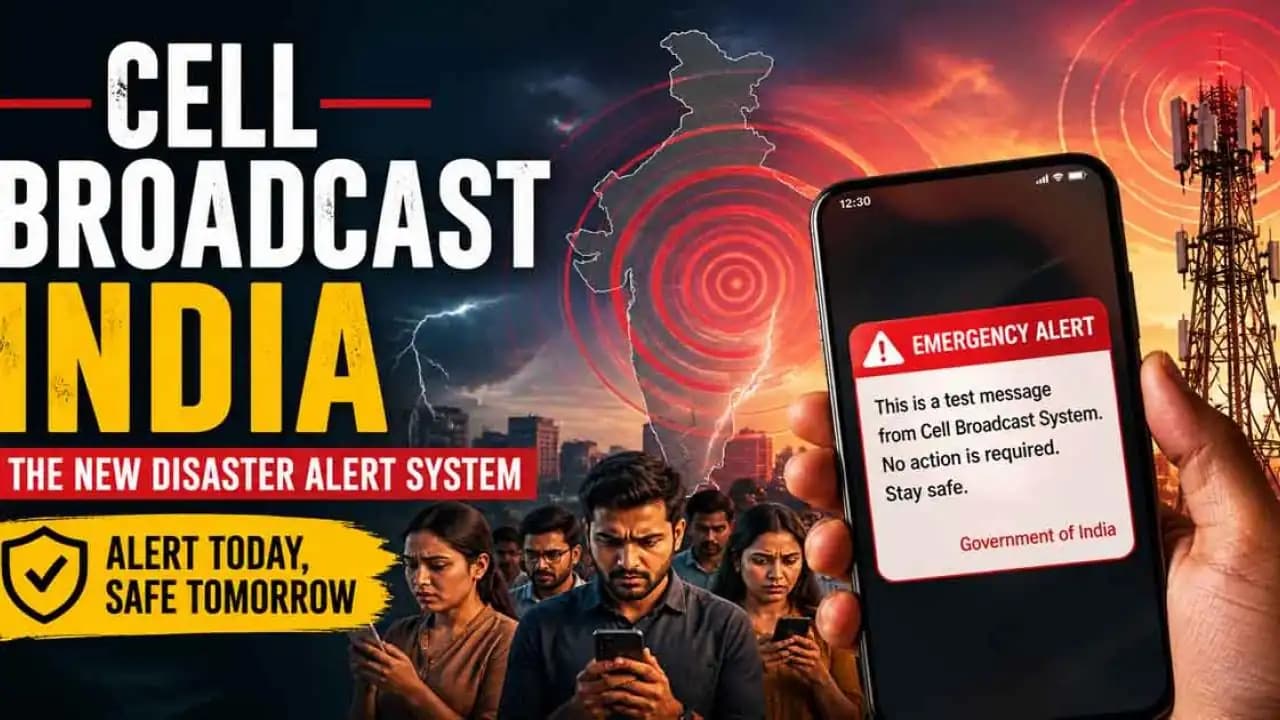
The Cell Broadcast India system marks a significant shift in how emergency warnings reach millions of citizens. Designed as a nationwide disaster alert mechanism using indigenous technology, it enables authorities to send instant, location-specific alerts directly to mobile phones without relying on traditional messaging networks.
Recently, many people across the country received a loud alert labeled as an “extremely severe” notification. While it startled users, the message clearly stated that no action was required because it was part of a system-wide test conducted by the government.
This initiative represents more than just a technical upgrade. It reflects a broader transformation in public safety infrastructure one that could reshape how India responds to disasters, crises, and emergencies.
Why Cell Broadcast India Is a Critical Upgrade in Public Safety
India faces a wide range of natural and human-made risks, from cyclones and floods to industrial accidents and security threats. In such scenarios, time is the most valuable resource. Delayed warnings can cost lives.
Traditional communication Methods SMS alerts, TV announcements, and radio broadcasts have inherent limitations:
- SMS can be delayed or fail during network congestion
- Broadcast media requires users to be actively tuned in
- Social media depends on connectivity and user awareness
The Cell Broadcast India system addresses these gaps by delivering messages simultaneously to all phones within a geographic area, regardless of network load.
This ensures that critical alerts reach people instantly even when networks are overwhelmed during emergencies.
What Exactly Is Cell Broadcast Technology?
At its core, cell broadcast is a one-to-many messaging system integrated into Mobile networks. Unlike standard SMS, which targets individual phone numbers, cell broadcast sends messages to all devices connected to specific cell towers.
Here’s what makes it different:
- No phone numbers required: Messages are sent based on location, not contact lists
- Instant delivery: Alerts reach millions of devices simultaneously
- Network resilience: Works even when mobile networks are congested
- Geo-targeting: Only affected areas receive relevant alerts
This technology is already used globally in systems like Wireless Emergency Alerts (USA) and EU-Alert. India’s version, however, has been developed using indigenous capabilities to suit local needs.
How Cell Broadcast India Works During Emergencies
The system operates through coordination between multiple government agencies, including the Department of Telecommunications and the National Disaster Management Authority.
When a threat is detected such as an approaching cyclone or earthquake the process typically unfolds as follows:
- Threat Identification
- Authorities analyze data from weather agencies, disaster management systems, or intelligence inputs.
- Alert Generation
- A standardized emergency message is created, often including instructions like evacuation or safety measures.
- Broadcast Activation
- The message is transmitted via mobile towers to all devices in the targeted area.
- User Notification
- Phones display a pop-up alert accompanied by a loud sound or vibration, even in silent mode.
This design ensures maximum visibility and immediate attention critical factors in high-risk situations.
Why the Recent Test Message Was Important
The widespread alert that users received was part of a nationwide testing exercise. The government sent a standardized message to evaluate system performance, coverage, and reliability.
The message included key elements:
- Confirmation of the launch of an indigenous alert system
- Assurance that it was only a test
- Clear instruction that no action was required
Such testing is essential because disaster communication systems must function flawlessly under pressure. Even minor delays or gaps can have severe consequences.
Authorities are using these tests to assess:
- Delivery speed across telecom networks
- Device compatibility across Android and iOS
- Regional language integration
- Public response and awareness
Advantages of Cell Broadcast India Over Traditional Alerts
The shift to this system offers several tangible benefits that extend beyond speed.
1. Mass Reach Without Overload
Unlike SMS, which can clog networks during emergencies, cell broadcast delivers messages Without adding traffic strain.
2. Location-Based Precision
Alerts can be targeted to specific districts, cities, or even neighborhoods, reducing unnecessary panic.
3. Immediate Attention
Distinctive sounds and pop-ups ensure that users notice alerts instantly, even if their phones are silent.
4. Privacy Protection
Since the system does not use personal phone numbers, it maintains user anonymity.
5. Multilingual Capability
India’s version is designed to support multiple languages, ensuring inclusivity across diverse populations.
Challenges and Limitations to Watch
While Cell Broadcast India is a major advancement, it is not without challenges.
Device Compatibility
Older phones or devices with disabled emergency alert settings may not receive messages.
Public Awareness
Initial tests caused confusion because many users were unfamiliar with the system. Awareness campaigns will be crucial.
Uneven Reach
Some users reported not receiving alerts during tests, indicating gaps that need to be addressed.
Alert Fatigue
Frequent test messages could lead users to ignore alerts over time, reducing effectiveness during real emergencies.
These issues highlight the importance of careful implementation and ongoing refinement.
The Broader Impact on Disaster Management in India
The introduction of this system signals a shift toward proactive disaster management rather than reactive response.
Historically, India’s disaster response has relied heavily on post-event coordination. With cell broadcast, the focus moves to early warning and prevention.
This has several implications:
- Reduced casualties through timely evacuation
- Improved coordination between agencies
- Greater public trust in government communication
- Enhanced resilience in vulnerable regions
In essence, the system transforms mobile phones into life-saving tools.
Future of Cell Broadcast India: What Comes Next
The current rollout is only the beginning. Over time, the system is expected to evolve in several ways:
Integration with Smart Infrastructure
Future alerts could link with traffic systems, public transport, and emergency services for coordinated responses.
AI-Driven Alerts
Advanced analytics may enable predictive alerts based on real-time data.
Regional Customization
More localized alerts tailored to specific risks, such as coastal warnings or urban flooding.
Global Interoperability
Alignment with international standards could improve cross-border disaster communication.
As India continues to digitize its infrastructure, the role of such systems will only expand.
Why Every Citizen Should Understand This System
Even though no action was required during the recent test, future alerts may carry critical instructions.
Understanding how the system works can make a difference in emergencies:
- Recognize alert tones and messages
- Follow instructions promptly
- Avoid panic and misinformation
- Help others understand the alerts
Preparedness is not just a government responsibility it is a shared civic duty.
FAQs
What is Cell Broadcast India and how is it different from SMS?
Cell Broadcast India is a system that sends emergency alerts to all mobile phones in a specific area simultaneously, unlike SMS which targets individual numbers and can be delayed during network congestion.
Why did I receive an “extremely severe alert” message?
The alert was part of a nationwide test of the disaster warning system. It was not a real emergency, and no action was required.
Will Cell Broadcast alerts work on all phones?
Most modern smartphones support the system, but older devices or disabled settings may prevent alerts from appearing.
Can I turn off Cell Broadcast alerts?
While some test alerts can be managed through phone settings, critical emergency alerts are typically designed to override user preferences.
How will Cell Broadcast India help during disasters?
It provides real-time warnings, allowing people to take immediate action such as evacuation or safety measures, potentially saving lives.
Conclusion
The rollout of Cell Broadcast India represents a foundational change in how a nation communicates during crises. By combining speed, precision, and scale, it bridges a critical gap in disaster preparedness.
While the technology itself is powerful, its success will depend on awareness, trust, and consistent execution. As testing continues and adoption grows, this system has the potential to become one of the most important public safety tools in modern India.